Throughout my life I have made decisions that, upon further inspection might have been considered foolhardy; misadventures that have become known as “pulling a Fent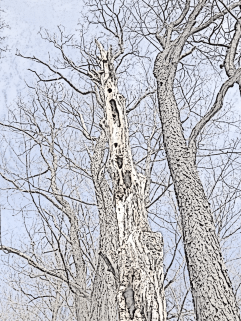 on”. A couple of years ago a medium size tree snapped in our backyard leaving behind a tall, 30-foot stump called a “snag’. I foolishly let it be, mostly because it was right on our fence line and didn’t seem to be harboring any malevolent intentions, as would the Madagascar Attack Snag, known to be mean-spirited and impatient. Over the ensuing months the snag, whom I named Radcliff, became home to an increasingly boisterous hoard of persnickety woodpeckers, all of whom are most likely named Woody because woodpeckers, duh. I wondered why woodpeckers didn’t succumb to regular and debilitating concussions but then I thought, how would I know? One fine sunny day last week I noticed Rad the Snag had begun to exhibit a rather pronounced lean, like an arboreal drunk against a lamppost. Given his current center of gravity a collapse would likely take out a substantial section of our fence. Fenton may not know much but he can sense when it is Time For Action. I go up to Rad and push him to see how frail he was and uh-oh, I could move the trunk with a slight push. I figure if I get a 31 foot rope I can pull Rad away from fence and bring him down in a poetic shower of leaves and debris. This reasoning is done with that part of my brain that thought riding a toboggan would be fun, and if a little wasabi adds zest a LOT will be so much better. I find the rope and put on some slippers. Yes, I said slippers which in retrospect seems an odd choice of footwear for the amateur backyard lumberjack, but this is ME and my stumble-bum story, so slippers it is. I walk outside the fence and wrap the rope around the trunk, but then my cat Tinky appears, wanting to help or watch or warn me away before disaster befalls! I have to move the cat away from the predicted drop zone, lest another of his nine lives be subtracted. I am finally ready and begin to pull, slow and steady. And it works! Rad comes crashing down with a great WHUMPF of finality, just as I had seen in my mind’s eye moments earlier. I turn around to make sure Tinky is OK, but he has become a dot on the horizon. Didn’t expect THAT did ya, Tinkster? At this point I could have just stopped, gone back inside and considered the heroic deeds of Slipper-Man! But I see that while Rad is down he is still attached to the stump by a bare thread of wood, so I decide to complete the job and shove the trunk from the stump. I walk up and place both hands firmly on the trunk and give it a mighty shove, as Slipper Man is wont to do. Unfortunately Rad is hollow and my hands go completely through the thin bark and plunge inside! This throws me off balance and with my slippers trapped under some branches I am in the irrevocable throes of gravity itself. Hands trapped, feet trapped I go over the trunk in a slow motion roll, slippers flying every which way. As the dust clears I find that I have joined Rad on the forest floor, both of us flat on our backs peering peacefully up at the clear blue sky, two creatures of nature in our own weird ways. Irony is our friend. I get up to see if anyone has witnessed my little one-act farce, but it appears that if a tree falls in the woods while Fenton is near, it makes no sound at all other than that darn giggling.
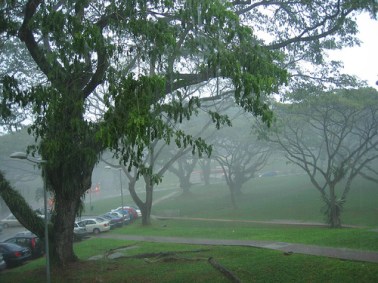 drenched landscape. But this is not that type of storm. It does not move across the land, rather, it simply appears above you and begins. One year it rained continuously for 21 consecutive days. I recall walking to the bus stop each morning carrying one of those golf umbrellas, the big ones with the wooden handles, thinking THIS is the day the sun appears. The umbrella became part of me like another limb, a constant reminder that the air was a watery compound separated from me by this thin nylon sheet, my underwater deep diving umbrella. Of course it eventually stopped raining as it must, and the sun came out hot and humid, not so much drying the land as steaming it like a dim sum platter where we were the dumplings. I miss Singapore and her tropical rain, the thick warm air that surrounds you, there on the equator of Planet Earth.
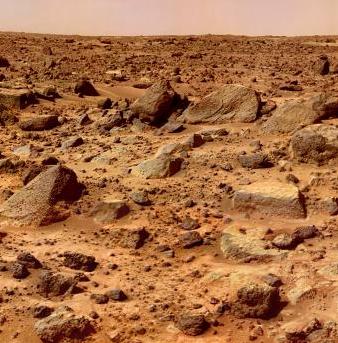 dwell obsessively on our internal squabbles, we are also pretty amazing beings when we get out of our own way. Think about the courage, tenacity, grit and wisdom it took for early peoples to sail across oceans without really knowing what they might find on the other shore. Might they sail off the edge into the abyss? Now think about how much more it took to leave the planet and stand on the moon, our blue and marbled home so far away and that same abyss at our back. We have taken a brief hiatus from the outbound train, but we have not stopped letting our eyes drift upward to the great canopy of lights. I sense our unbound exploratory drive is beginning to probe the unknown once again, reaching out to touch something new. The red planet beckons (there!) and we have begun to make our plans. We don’t yet have all the science and lack certain technologies but the greatest obstacle — the will to get out there — has been overcome. I hope I am around to see it, but even if I am not I have already walked the red dust, footprints into forever, humbled by the sheltering sky.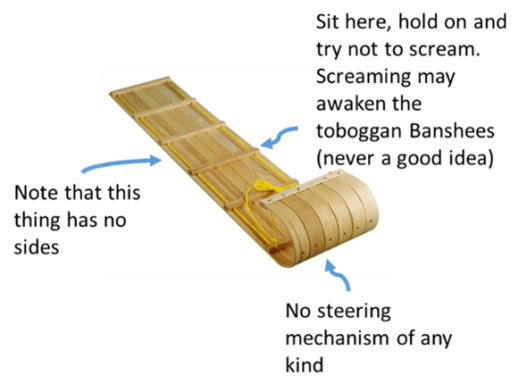
 to bring skin to life, the robes draping beneath the mother and her son’s still body. The Virgin Mary gazes down on her beloved Jesus, and cradles him ever so gently, as I am sure she did many times to bring him comfort as a child. I am told that Michelangelo took just over two years to chisel this scene from a single block of marble and that it was the first and only work he ever signed— “Michelangelo Buonarroti made this.” Gazing at this act of towering genius I am filled with hope, for if a single man could make The Pietá, then what greatness, even in the smallest things, may be within us, each and all?
  beauty. We gaze upon them, hold them and clumsy beasts that we are sometimes drop them, the resultant shards diminished by the whims of entropy. Or maybe not. Nature can be a jealous host and here she takes a moment to teach us a lesson – that we are not the only forces at work in the universe. The sea accepts our worthless broken pieces and patiently creates, through tide and salt and sun and friction, the stunning frosted beauty of sea glass. Our trash has been returned to us and been made into a thing of uncommon beauty. We walk on the beach and find our glass again — an unexpected gift — and perhaps we glance around to catch a glimpse of the trickster who produced this impossible magic. But there is only us and the wild wind.
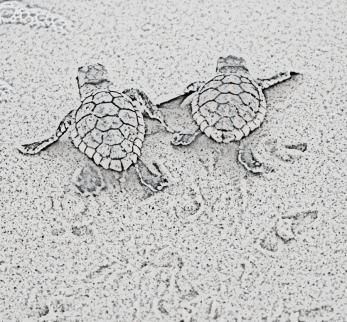 that the species is given the best chance to live on. The turtles and birds have reached a kind of terrible balance, there on the coastline, and somewhere a vast ledger is writ as the earth does her infinite sums. In truth the turtles will face their greatest threat out in the open sea from our blanketing nets and endless hunger as we too will play our part. In the wee hours if you wake, you may hear the far off sibilant hiss of the turtles on the sand, the cries of the wheeling birds above and the grinding sound of Brobdingnagian gears moving life forward, into the rising sun.
 your fate to the wind with each step, not knowing if the next stone will be steady, or maybe wet with spray and friction-less as ice. Halfway there the thought begins that maybe this was a bad idea; that maybe we can cross another day. But in truth we stand before the gates of life and the decision is ours. Beyond lies the great wide world and perhaps spaces and things unknown. Behind us is safety and comfort. It is our nature to test the path, to take the chance and build our lives, step by measured step. On the opposite shore we look back and realize our fears were unfounded. Inside the voice echoes, “let’s do another!” And so we do. And so we are.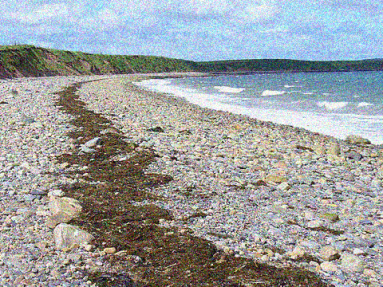
 whoisfenton