Summer squash.

Let’s get this out of the way right up front shall we? I am not a huge fan of squash. The squash I am referring to is not the racket sport played in a tiny room with a little hard ball that flies around whilst the players whack each other with their bats or whatever they’re called.

No, I am speaking about the vegetable of the genus cucurbita. Wikipedia describes this plant as “…herbaceous vines that grow several meters in length and have tendrils”. For the most part we prefer squash with tendrils removed, because, guck. I will also put aside any discussion of the aptly named yet laughable “gourd”. Think of the quotes around the word “gourd” as little word fences built to protect neighboring words from its suspect influences.

Pop loved to garden and somehow acquired small plots of land in Maryland, New Jersey and West Virginia as we moved from place to place. As kids we would be regularly asked to help out, and at the time this work ranked at the bottom of things we would volunteer to do. Yet over the years these memories – planting, raising and eating the food we grew ourselves – created a lifelong love of vegetables.squash-yellowcrookneck
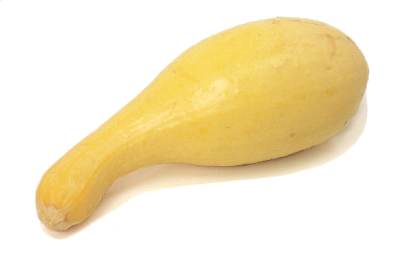
Pop really liked squash and grew several varieties including acorn, winter and zucchini and I never much cared for those. But the one I did like was summer squash, sometimes called yellow, crooked-neck squash. I think I enjoyed the simple way is was prepared and its generally low guckiness coefficient. Come to think of it, simple with minimal guck might apply to many parts of life.
Fireflies.

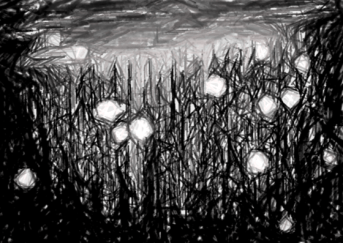
The summer night is filled with fireflies. I see them signaling constantly, knowing their time is limited and species at risk. There is something innately amazing about lifeforms that generate their own light. In comparison we must seem like large lumbering shadows, destined to live forever in the shade, bereft of luminosity.fireflies-1

As kids in Maryland my brothers and I would take off the glowing firefly abdomen and smear it on our foreheads in an attempt to mimic a third eye. In retrospect this seems somewhat strange and more than a little cruel, but it was clear even then that we were not destined for sainthood.

Bio-luminescence has always fascinated me. Fireflies and glow worms are the most visible here, but some fungi have the property as well. And let us not forget certain forms of ocean life, including the remarkable phytoplankton, making the sea itself shimmer with cold fire. That these organisms can radiate in the visible spectrum is a wonder of nature; our very own E.T. but one who is already home.


Watching a matinee in the morning.

Ok, I will admit to occasionally binge-watching an entire TV series on the internet. Devouring 7 or 8 episodes at one sitting is like reading several chapters of a book, except for the “reading” and “book” parts.

Yet for movie watching there is nothing quite like the shared experience of the theater. And I don’t mean those little teeny ones either. I mean those giant mondo cineplexes with surround sound and big soft seats and screens the size of a 747. By the way have you ever stood on the tarmac next to a 747? Those babies are so huge they make you feel like a little shrew or beetle or something. Anyway, where was I? Oh yes, the movies.matinee-2

This summer, my daughter and I have been going to matinees on weekends.  Even the word “matinee” brings forth memories of a bygone era, one where men wore fedoras and high pleated pants and spoke in quick, clipped tones.  I always try and get to the show a bit early to glom the best seats and to watch the trailers. Movies have three sections: the advertisement section, the trailer section and the movie section. After many movies we have effectively memorized the advertisement section, especially the part where..oh wait I better not give away the ending.  I tell my daughter the trailers are the best part. At the end of the trailer section I am tempted to applaud but I am told this is bad form, akin to yelling into your cell phone, “Hello? No I can’t I’m at the movies! The trailers are great! All the people are looking at me! Bye!”

We recently went to see “Star Trek: Beyond”. I told her that if they had given a leading role to a pop star, they could have called it; “Star Trek: Beyonce’ ”. One of the trailers was for the latest Bourne movie predictably called: “Jason Bourne”. She leans over and says, “they should have called it, ‘Bourne Again’ “. We are the Punsters, hear us groan.

We leave the bright hot day to enter the dark warrens of the inner sanctum. We share the experience with others. We are transported to the Place of the Story and share that journey as well, senses attuned to worlds within worlds. Eventually, the credits roll and the patient sun pulls us back.  Blinking like moles, we pick up the next chapter, right where we left it.

Leaves taking the energy of the sun and turning it into food.

leaf-3

In the forest we are overwhelmed by the color green, so much so that we can be unaware of what is happening all around us. The green we see is the reflected sunlight of the chlorophyll molecule.  Chlorophyll is designed to use the red and blue light spectrum most efficiently in the process of growth called photosynthesis. The unwanted light spectrum is reflected back to us; to be perceived by our eyes as the color green.

Most life on earth depends on the process of photosynthesis either directly or indirectly. What about mushrooms? (you ask innocently). They grow in the dark, amirite?. This is true, however even the mushroom requires nutrients, usually in the form of decaying plant matter – stored sunlight.

The great web of life begins with the sun striking the humble chlorophyll molecule and, working with others within the plant, converting sunlight to mass. And it is going on all the time, kickstarting the food chain of our green earth. Does it get any cooler than that?  I find myself looking closely at tree leaves to see if can discern the process with my naked eye, but the world does not expose her secrets so easily — a magician guarding her magic.

The word “burlap”.

Today’s word is “burlap”.  This word looks like someone just made up a pronounceable series of letters and then looked around to see what it might mean.  Perhaps it might mean the sound a ferret might make as it prepares to dine, or maybe that fuzz that seems to collect in the corners of sealed rooms.  But noooo, let’s called it the fabric used to make those funny looking sacks.  And while you’re at it filled ’em with pinto beans.

burlap

Kelp Forests.

I have long been a huge fan of forest ecosystems in that they provide direct and deep understanding of how things work together, here on planet earth.  Perhaps we might learn from the forests of the world.

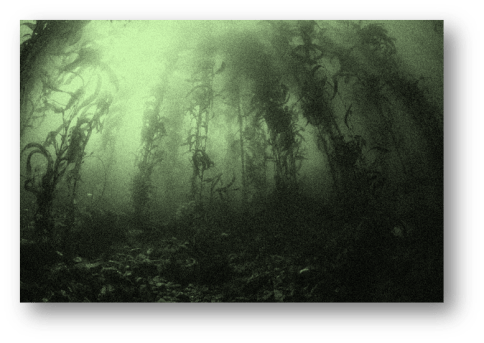
One forest ecosystem that for me stands out is the kelp forest. It is found throughout the earth in the clear cool shallows of temperate ocean waters.  Kelp is not really a tree at all, but a form of marine brown algae.kelp-mod-2.png

Kelp is a marvel of adaptation. The long stems are flexible yet strong enough to withstand tidal surges and wind-driven waves. Lacking roots, the kelp anchors itself to hard surfaces on the ocean floor using an elaborate system of tendrils. It is found more frequently in clearer water because it uses photosynthesis for energy and growth. Kelp achieves buoyancy by means of tiny nitrogen-filled sacks arrayed along the underside of each frond. In ideal conditions kelp can grow three feet in a single day and have reached lengths of 175 feet.

Kelp is amazing all by itself, but equally incredible is the biodiversity supported within the kelp forest. Consider the lowly sea urchin, previously mentioned in these pages as a culinary delicacy for some human beings, although not for this particular human being. Well, it turns out the urchins eat kelp, and at normal population levels they do just fine eating the old dead kelp fronds that float to the ocean bottom. If the urchin population grows too fast however they can completely overwhelm and consume a kelp forest. Enter the sea otter. Even more than some strange humans, otters love urchins and love them to the point of restoring balance and equilibrium.

In the Norse legend of the Yggdrasil a great tree exists to connect the nine worlds.  In the lore this world tree also harbors dragons and other legendary creatures within its branches. The beauty of the kelp forest is that no such legend is required. Kelp is the perfectly adapted connective tissue of our world’s living marine systems. No dragons here, but we do have urchins and otters and they will have to do.

Early morning mist on a pond.

mist

I am an early morning person so by the time I rise the night mists remain clinging to the earth.  The air is cool and wet with barely seen shadows patterned like thin drapes bound in gray lace.  On the lakes and ponds the thin fog distorts and softens the light, giving the scene the look of an old painting discovered in the attic, dusty and worn.  A dreamscape extended in wakefulness, the mist will inevitably fade under the heat and light of the racing day.  Dawn is clear-eyed and relentless, a wolf among the nervous reeds.


Pi (π).


I am certainly no mathematician.  I find it cool at the level I understand things, making me an interested third party I suppose.  I do know that mathematics is the symbolic language we humans have developed to try and understand the world.  It forms the basis of science and engineering and thus, the built world.

Sometimes math concerns itself introspectively with math itself.  The structure of mathematics hinges on progressively elaborate stages, new ideas built upon previous ideas, each meeting the stringent requirement of proof.  Math works because it is logically complete, reliable and repeatable.

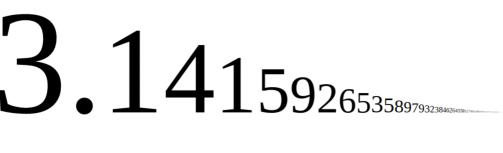
One area that I have found amazing is the study of numbers, which on the surface sounds like the most boring thing on Earth, but for me it contains its own odd beauty.  I found this picture of the number Pi which is defined as the circumference of a circle divided by its diameter. It is equal to:

pi.png

No matter how large the circle this ratio is always the same.

The picture depicts just how strange the number Pi is.  As you attempt to calculate it you discover that no matter how precise you are, the group of numbers to the right of the decimal point gets longer and longer and this sequence of numbers never repeats.  This means that Pi cannot be represented exactly as a fraction or ratio; such numbers are called irrational numbers.  Pi is something else as well and we’ll get back to that shortly.  Numbers that can be represented as fractions are called rational numbers.

How many rational numbers are there?  Just when you think you found all of them you just add 1 and there is another one, so you don’t really reach the last number, ever.  I like to call this a LOT, but mathematicians call this an infinite set, or in the case of rational numbers, a countably infinite set.  Ok, not sure what that means but does it imply that there are sets of numbers which are uncountably infinite and is uncountably even a word?

Welcome back to our good friend Pi, an example of an irrational number.  The set of all irrational numbers is provably an uncountably infinite set.  While the rational number set and the irrational number set are both infinite, the set of irrational numbers is in some odd way the larger of the two, meaning that there are more irrational numbers than rational numbers.  This sentence is usually followed by blank stares and the sound of heads exploding, as well they should.

And finally even though we have said that Pi is a member of the irrational group of numbers, it also has specific characteristics which make it a special irrational number – a transcendental number.  All transcendental numbers are irrational, but the reverse is not true. I don’t know about you, but the fact that some numbers are called transcendental is the coolest thing ever, even as the concept leaves my neurons gasping for air.

 Mathematicians think about things like this because they never know where such seemingly abstract thoughts may go.  Perhaps to infinity and beyond.

Coming home.

walking-kids

In my long life there have been things I have said and done which did not advance the cause of good in the world nor bring joy to myself and others.  Life sometimes teaches us in stages, through studies etched in weakness and greed and ego.  Those moments of forced learning are balanced, thankfully, by a kind of karmic calculus that offers a secret code for distant answers. 

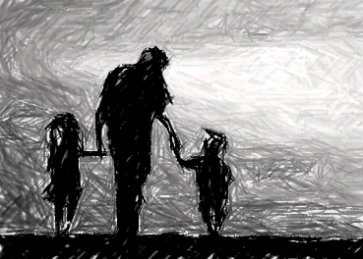
Once, I was given the opportunity to help raise two children, to watch them grow; to see them fall down and stand again, to try and answer their questions when their curiosity outgrew their world; to read a storybook while lying next to them in bed, to take them out into our world to be as amazed as I by the universe and its clockwork ways. 

The wheel turns.  They are grown now and have left the nest.  We still talk and write and share the happenings here and there, living apart yet growing together.  They belong to themselves and to the future they make.

There will always be days when the gods conspire against us and tempt us to forget something important; something we should have known.  Days when the hot water heater breaks on the coldest night of the year, when the car won’t start, when the paperwork becomes too much to handle.  On those dismal days you walk in the front door, bone-weary, and these two kids rush up to you and hug you with shouts of “Daddy!”.  And then the burden is lifted and the teacher finally understands the lesson, there in front of him all along.

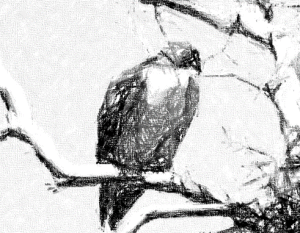
Seeing a solitary hawk perched high on a bare branch.

An apex predator, the hawk can seem preternaturally still on the branch, so much so thathawk
you miss it at first. The ability to blend in is as much a part of the hawk’s arsenal as its keen eyesight and the incredible speed of its dive; the beak, the claw. I used to worry about our cat Tinky as he spends the bulk of his life outside in the wild, returning to eat now and then. I would not be in the least surprised if he hasn’t attracted the watchful eye of more than one hawk circling high overhead. He is the perfect size after all.

I have experimented with bringing Tinky inside, but he begins immediately looking for an escape route, as if trapped in a very large cage. He also issues these plaintive little yowls, and will continue to issue them until released or until you go mad whichever comes first. I conclude that Tinky is not going to become an inside cat after all these years in the woods. He prefers the hawk.