Makoli.

picture1

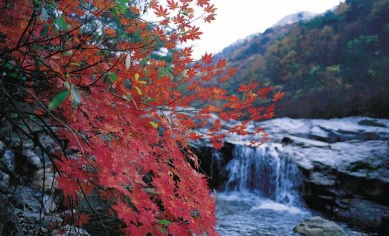
The geography of South Korea is blessed with some of the best hiking trails anywhere, with dozens of craggy yet accessible mountain peaks. I had the opportunity long ago to hike the trails of Songnisan National Park, about 2 hours southeast of Seoul. We started a bit late in the day so by the time we parked the car and hiked up the mountain to marvel at the views, the sun was beginning to set. On the trail down we made a youthful decision to stop off at one refreshment huts adjacent to the trail, yes right there in the forest on the mountain.
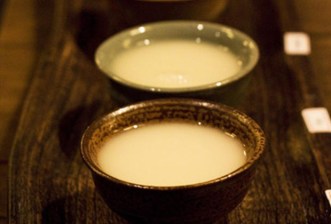
makoli

My Korean friends convinced me to try a local beverage called makoli, an alcoholic drink which appears to be a bowl of milk, but is actually a fairly potent form of rice-based moonshine. So we sat on rocks and talked for a bit and then realized two unfortunate things. One, it was becoming quite dark and we still had to maneuver down a fairly steep trail to get back to the car; and two, the makoli had begun to have some rather distinct effects on out ability to reason and, well, maneuver. My memory becomes a bit vague at this point — either a result of my brain cells leaping to their death into a foaming sea of makoli, or my singular attempt to forget the stumbling avalanche of terror which likely followed. I remember going down in a heap a couple of times and the sound of distant giggling.

If you get to Korea in your travels I can recommend taking a day to hike Songnisan. And if someone offers you a bowl of milk along the way, I suggest waiting until you reach a flat spot, preferably one with cushions.
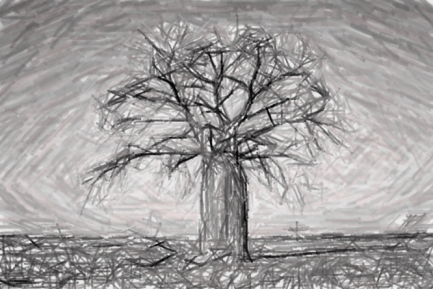
Baobab tree.

baobab-tree-3

Nature has a pattern of producing forms of nearly infinite variety. One of the most compelling and unusual is the baobab tree found on the arid plains of eastern Africa and Madagascar. The baobab is sometimes called The Upside Down tree because its branches resemble the root systems of other trees, as if had been planted by some early farmer who failed to follow instructions.

The wood of the baobab is quite soft and water saturated, allowing the tree to survive in the desert during long periods of drought. Lacking traditional rings, the age of the baobab has until recently only been estimated through the traditions and folklore passed down from the native peoples who live amongst these ancient beings. Carbon dating techniques now place the baobab’s life expectancy at one thousand years, give or take a century.

When a baobab dies the thick trunk collapses in on itself, the resultant wood particles blown away on the desert wind. Thus, the tribes of East Africa believe that the baobab does not die, it just disappears. These strange trees have been out there for centuries, silent gatekeepers holding witness to the slow ebb of life in the desert.

I have never seen a live baobab nor stood next to one, but that would be something to do one day — to listen to their stories out there in the cathedral of dry sand and subtle wind. Perhaps they might want to know why we race hither and yon, building and rebuilding the world?  And why we insist on doing so upside down?

SPAM™ Musubi.

In 1937 Hormel created a material called the Space Protective Aluminum Mosaic (S.P.A.M) which was designed to act as a heat shield for the spaceships of the far future.  Given that those were decades off, they opted to also produce a food-like version called SPAM™. It spam-and-eggs_lwas and is marketed in small metal tins which you opened with an attached key. Inside would be the actual SPAM surround by a gelatinous substance, giving it the appearance of a mystery organ extracted from a large square animal.
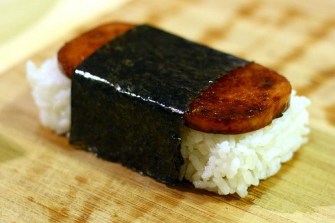
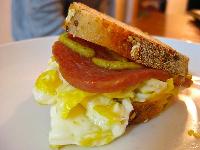
As a kid I would relish a fried SPAM sandwich on toast covered with scrambled eggs, thereby assuring a lifetime supply of sodium, cholesterol and fat. Yum.spam-muisubi

Hawaii consumes more SPAM per capita than any other state, likely a holdover from the years following WWII.  There was a  requirement then to feed a large number of soldiers on an island surround by several thousand miles of ocean, and SPAM has a shelf life of at least 80 years, although the science is still evolving. My own Hawaiian favorite is SPAM Musubi shown here – Spam on rice held together by a plucky band of seaweed. Heat shield or no heat shield, it don’t get no better than that.

Beanbag chairs.

I remember my mom working away at her pedal powered singer sewing machine, stitching together three sides of a small canvas sack. Before closing it she would fill it with dry chick peas. Behold the beanbag, the simplest toy since the “ball” and the “rope”. We kids would rush off to throw these things around, toss ‘em to each other and basically let gravity etch her parabolic curves. Beanbag nirvana.

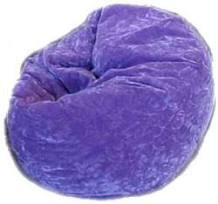
Fast forwardbeanbagchair a number of years and someone thought to apply this concept to furniture in the form of beanbag chairs. A purple one is pictured here, looking much like the mutant concord grape from which it evolved. These things were excruciatingly popular back in the 60’s and 70’s, when young folks found it necessary to “crash at your pad man, just till I get my head on straight”. Sure dude, just don’t hurl on my beanbag – that is like real Corinthian leather.

The concept of the beanbag chair seems so logical – plop yourself down on one of these bad boys and let it mold into the shape of your backside. I expect these chairs have always been more popular with younger, limber people. Old folks like me are pretty good at plopping down, but require significant algorithmic assistance at the standing up part. I imagine myself today rocking back and forth until I reach my tipping point, rolling off the beanbag onto the floor and then creakily rising to my feet, beaming like a loon.

Their time has passed, but I’ll bet a lot of folks still have them safely tucked away, back in the attic behind the Silly Putty and the walkie-talkies.

Snow geese lifting off as one from a blue lake.

geese-in-flight

I remember seeing this image on a nature channel some years back when I watched TV. It was the sudden and majestic lifting off of snow geese from a crystal clear mountain lake. I imagined the white, the blue, the coordinated timing to be an exhortation of life.

Each year the snow geese come from the Arctic north, flying upwards of 8000 feet to winter over in the lakes and ponds of North America.  They have been making this pilgrimage for over 35,000 years; measuring the days with the simplicity of a sunrise, giving the people of long ago a way to mark the seasons. These early people revered the birds and lived in harmony with them. They came represent the beauty of nature, a vision of wildness, perhaps a glimpse of an earthly paradise. The humble human; the soaring bird; all part of the great living engine of Earth.

People migrate too but now our journeys take place mostly in our hearts and minds. We taste the bitter winds of fate, tackle the valleys of despair, climb the mountains of joy. And somehow we figure it out. Even in our darkest hour when it seems that misery and cynicism fill the world, we figure it out — and lift off as one.

The word “spelunking”.

The word “spelunking” is one of those words that provides no clue as to its meaning. I cave-word.pngmean you can follow along letter by letter and end up in a place bereft of knowledge, like a ferret gazing at an electron microscope. Perhaps you think that spelunking is a kind of a drinking game one undertakes in Lichtenstein, traveling from pub to pub until you are found under a flickering street lamp, curled into a fetal position and reeking of swill. You’ve been spelunked fer sure.  But no, spelunking is reserved for those brave few who explore caves, deep underground in the cold and dark with hundreds of tons of earth and rock above you. Those of you who have seen the movie “Descent” will understand why this is a bad idea.
 

The heat inside a wood drying kiln.

railbeladen-4

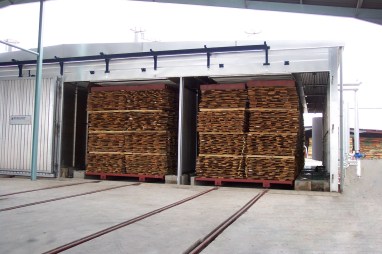
My father worked for the Forest Service in the US Department of Agriculture. He specialized in renewable forestry techniques and sustainable wood products. Once we went on a road trip to Florida to visit Grandma and Grandper in Avon Park. On the way I remember stopping by a lumber yard in North Carolina, a harbinger of the time I would move here some 35 years in the future. As lumber is prepared for use it is dried in large kilns, which basically bake out the moisture in wood. We went inside one of these structures, and I have never before or since experienced that kind of heat (140 to 170 degrees Fahrenheit). I guess I could say it was a *dry* heat so not so bad, but I would be lying.  It was bad — like the surface of Venus bad. The dry smell of raw timber was somehow primal, marking its passage from forest to function. Given a choice I would have preferred the living tree to those planks and boards there in the heat and the dark. But humanity makes use of the things it sees, converting the natural world to its particular form of nature.