I have long been intrigued by the advancements in computer graphics over the years. Extremely high resolution animations are commonplace on PCs today. Immersive 3D is moving from a curiosity to a useful tool.
As image resolution has approached and exceeded that of the human retina, animations involving human-like characters has uncovered some heretofore unknown phenomena with respect to human perception. As human facial characteristics and images move from the cartoonish to the ultra-realistic, we undergo a kind of discomfort when viewing faces that are close to real, yet slightly off. This is called the “uncanny valley”.

It is not clear why these close approximations are disturbing – perhaps we sense there is something untrustworthy afoot and we do not like to be fooled, as we might feel if we see a painted clown smile on a person who may not be happy at all.
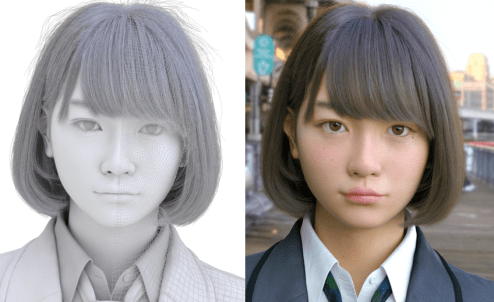
I await the day that we will be able to accurately render a realistic avatar on screen, an actor who exists entirely as images and algorithms, but who has never known life as we understand it. This “person” may also someday be infused with the ability to behave autonomously with an understanding and access to the enormity of the connected world. And then I wonder if, as it gazes out at us through its high-res lenses, it experiences a momentary pang of uncertainty and questions whether we are in fact “real”?

 whoisfenton