Late spring and early summer brings out life in all shapes and sizes. Many of these creatures are programmed to establish the next generation and thus have devised an astonishing array of behaviors to survive, even though they are racing against an implacable clock which always wins.
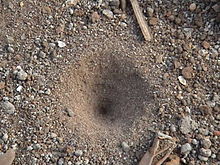
Growing up in the wilds of Maryland my brothers and I would find pits in the sand, like inverted cones. These were perfectly round and exquisitely designed, and it was clear that these excavations were made, but by what? By blowing straight down on the structure the sand would be moved aside to expose the tiny culprit: an antlion!
In the larval stage the antlion fashions these craters by digging down round and round in a tightening spiral to finally lie in wait at the bottom, great mandibles at the ready. When an unsuspecting ant or bug falls into the pit disturbing the walls it triggers a tiny avalanche and is the signal for the antlion to attack and grab its prey.
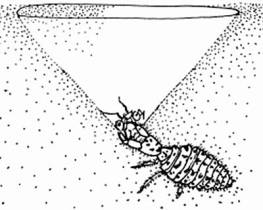
In reality this is a terrifically effective hunting strategy – the prey slides right down to you — none of that tiresome running and chasing. The antlion larva has a fierce aspect and would be the stuff of nightmares and science fiction movies if they were the size of say, a small dog. Yikes. Don’t worry; they are at most a centimeter or so in length.
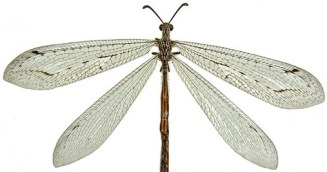
I used to wonder what the antlion turned into in their final stage of metamorphosis. Incredibly they become a type of dragonfly called an antlion lacewing. One would never expect that these two insects are the same creature at different stages of life. As I wrote earlier about metamorphosis, this allows the larva and the lacewing to go about their business without competing with one another.
Some readers might be creeped out by any insect, but I find them to be amazing little engines of life and survival. And when you think about it, aren’t we all?

 whoisfenton