Armadillos.

armadillo

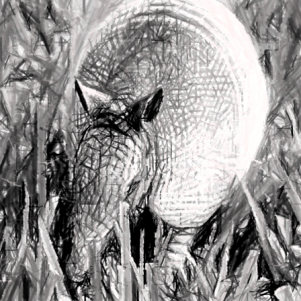
I am not sure what I find so intriguing about armadillos. It may be that they have adapted over the millennia and are a tenacious survivor of evolutionary tensions. They also have an unusual appearance in that they are armored with flexible plates, although only one of the 23 known species is capable of rolling up like a pill bug. All the others avoid predators by “fleeing on foot” through the dense underbrush, digging down in soft earth or swimming great distances.

There is one species called the screaming hairy armadillo which squeals loudly when picked up or is otherwise disturbed. It goes without saying that Screaming Hairy Armadillos would a GREAT name for a rock band and I blame the Rock Band Naming Society for this glaring oversight.

In doing what I laughably call “research” for this blog entry, I discovered that the overlapping scales on the armadillo’s back are called “scutes”, providing yet another triple word score in Scrabble and a candidate for Best Word Ever.

Like all living things, well *things* generally, behaviors and population dynamics are governed by physics. This is not surprising because physics attempts to describe and predict the physical universe, of which armadillos are a part. I think universities the world over should offer a course of study called Armadillo Physics taught by wild-eyed scientists wearing rumpled lab coats and carrying clipboards covered with cryptic runes.

Sign me up.

arma-2

Phototropism.

We all know that plants move, just that the motion is pretty measured relative to their brethren over in the animal side. This slow-motion dance is often the result of plants sensitivity to the gradual cycles of sunlight, darkness, warmth and cold.

Plants that seek the sunlight will twist and turn to follow the sun in an activity called positive phototropism.plant-negative

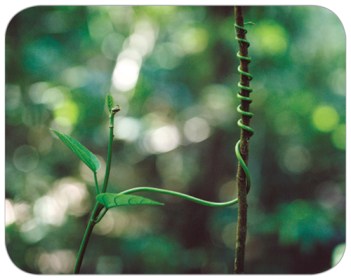
On the other hand (or leafy appendage) some climbing plants, like vines, exhibit a very cool and remarkable behavior. If they become disconnected from the tree or structure that supports them and fall to the ground, the portion on the ground will move off in the direction of something else to climb. The strategy it employs is to basically move away from the light and toward the shadows, because darker areas are likely to mean the trunk of a tree or other vertical surface.

DCIM105SPORT

These vine stems are now *negatively* phototropic, growing away from the sunlight and toward the shade. Once the vine resumes its vertical climb, it switches back to its more normal positive phototropic behavior. As it grows upward toward the sun, its leaves become larger and larger to collect the maximum amount of the sun’s energy.

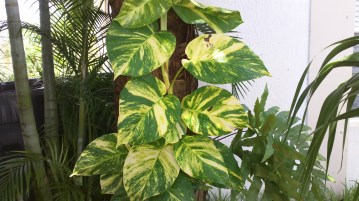
We humans like to place such plants in hanging baskets and let the vines trail down in artistic and dramatic ways. However when you understand the way these plants evolved and survived, we are basically hanging them upside down in a way that restricts their normal growth patterns.

When we think about vines and their complex behavior, we might conclude that these plants are in some sense thinking things through as we might, comparing and contrasting a risk/reward model and then making the “right” choice. But the reality — while not ours — is no less complex, happening way down at the molecular level where genes and enzymes interplay. Such mechanisms have been developing over millions of years and are happening right now, out there beyond your window in the light and in the shadows.

Graveyard stew.

graveyard-stewOne of the things Pop used to make was a breakfast concoction called “graveyard stew”. There are many versions of this but I liked the one Pop would make because of its simplicity. Basically it consists of two pieces of toast, lightly buttered and placed in a bowl. Over the toast is poured hot milk. A few shakes of salt, a few shakes of black pepper and Ouila! or Voila! (or walla! as I like to say). Some folks like to make it using cinnamon toast, but that seems like gilding the lily. And please no poached egg because, guck.  The origin of the name seems to be that (1) graveyard stew was served to sick people, (2) graveyard stew was a favorite of hobos who rode the rails, or (3) both. Bread, butter and milk – life in a bowl!

The word “sconce”.

A number of years ago I had the chance to do one of those bucket-list things and design and build the house in which we currently live. Well, “design and build” really means herding an army of construction people and answering questions about faucets, door handles, flooring, paint and a bazillion other choices you will inevitably live to regret for the rest of your life. Bucket list indeed.

One of those choices had to do with lighting – placement, type, etc – and this is where I first encountered the curious little word “sconce”. Not to be confused with “scone” which would create some delicious yet strangely darkened spaces, sconce lighting is thesconce-2 type that fits directly on the wall, like those flickering torches attached to the granite slabs of medieval castles.  Modern sconce lighting looks like this

or this.

sconce-1

The word sconce hearkens back hundreds of years, and meant a screen or partition erected to defend the castle gate or wall. It’s a fun word to say at a party like “I don’t know about you but I prefer sconce lighting”, and watch as people slowly back away.

Running home after work.

Life in Hawaii is defined by outdoor activities if for no other reason than the year round near perfect weather. The sun and air *call* to you, asking if you can come out and play. I can recall going to class at the University of Hawaii Manoa, and being completely distracted by the insistent day just beyond the glass and the siren call of the beach. And it didn’t help when the instructor, wearing shades and swim trucks, informed the class that surf was up and there was a perfect wave out there with his name on it. Later, dudes.

road-to-hawaii-kai

I never got into the world of surfing, choosing instead the solitary life of the long-distance runner, well, maybe not so solitary in a place where it seems *everyone* runs. I remember once doing a training run in the early morning, moving along at what I thought was a good pace, when I hear footsteps coming up fast behind me. I move over expecting to have my wheels blown off by one of the seriously athletic runners in the neighborhood.  Imagine my surprise when this little elderly lady sprints on by me, gray hair tied in a ponytail. She is I guess in her 60’s — maybe older hard to say — and mind you I am in my early 30’s training for the Honolulu Marathon. At first this is disheartening, to be so easily put in one’s place, but upon reflection that was amazingly impressive now that I am her age with a back that makes running impossible.koko-bound-1

Back then I was living in a part of Oahu called Hawaii Kai, and worked all the way over on the other side of the Honolulu at Ft Shafter. Two or three times a week I would get dropped off after work in the middle of town, and run the 8 miles home eastbound on Kalanianaole Highway.  I figured I could get my training runs in and simultaneously use my feet for transportation. Given the level of traffic on that highway I could almost make it home as fast as the creeping cars. I realize now that it probably wasn’t the smartest thing to be running for an hour next to a busy road, but too late now, huh?

Anyway, I did end up running my one and only Honolulu Marathon that year, finishing in just over four and a half hours. All these years later I remember being surprised that so many folks came out of their homes and lined the entire 26-mile route, cheering on friends and strangers, running in the sun and wind.

Spanish moss.

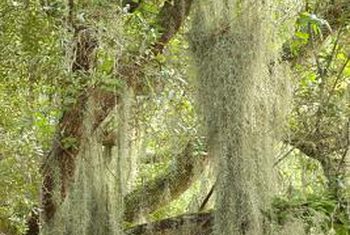
spanish-mossThere are some lifeforms that have become so associated with certain locales that it is almost impossible to separate the name from the place. Spanish moss is forever linked to the American south and the Gothic stories and ghostly histories therein. For me the image of Spanish moss hanging from a live oak or cypress trees brings back memories of the brief time I spent in Columbia, South Carolina and Savannah Georgia.

Despite its name it is not a form of moss at all but is actually a flowering plant.  It takes its nutrients directly from the air and rain and needs neither root nor soil.  Thus, Spanish-moss has escaped the bounds of gravity to live in the trees above us, casting withering glances at the earth below, light filtering through its filigree like a delicate, arboreal curtain. Whereas we came down from the trees to find our way among the high grasses of the Serengeti, Spanish-moss has taken the opposite route and found its place high in those same branches; balanced, tenacious, adaptive.