We get to see a solar eclipse this year, and parts of the world will bear witness to a total eclipse. In the direct path of the moon is a relatively thin band of complete shadow, called the “totality”. Many people plan major trips years in advance so that they can be positioned under the totality, which lasts just a few minutes. I am told that this is a visual spectacle unlike any other, the Sun’s corona clearly visible around the black disk of the moon. This works this way because while the moon is 400 times smaller than the sun, the sun is approximately 400 times farther away from Earth, so the two celestial bodies appear to have the same relative size.
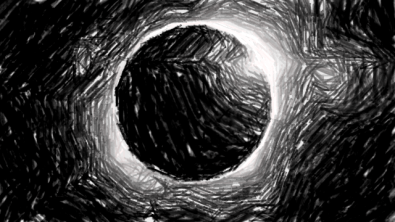
A solar eclipse cannot be ignored because it poses a challenge to our normal experience. Day becomes night as a black disk covers the sun, as if blocked by some enormous and threatening hand. Ancient peoples would become alarmed when faced with such an event and create elaborate fables and supernatural myths to explain it in terms that could be understood.
It has taken many years and the work of thousands of curious minds, but homo sapiens — tiny beings though we are — eventually understood the phenomenon. We no longer fear the unknown but celebrate its passing and seek out the gift of knowledge. Perhaps the lesson is not in the light that is temporarily lost, but in what is forever revealed.
 whoisfenton