And sometimes, sitting in my chair
I can feel the absence stretching out in all directions–
like the deaf, defoliated silence
just after a train has thundered past the platform,
just before the mindless birds begin to chirp again
–and the wildflowers that grow beside the tracks
wobble wildly on their little stems,
then gradually grow still and stand
motherless and vertical in the middle of everything.
~ Tony Hoagland
We are nearing the end our little trip into the past and inevitably, the future.
From Burlington we planned to take the ferry across Lake Champlain and then south through New York State, but the ferry service stops on Labor Day in anticipation of winter and ice. So we drove down through the rolling hills of Vermont hugging the lake’s eastern flank until a bridge crossing took us west to New York, then on to Paterson, New Jersey.
The history of Paterson mimics in some ways the history of America, a mill town created by immigrants from all over the planet and powered by the energy generated from the Great Falls of the Passaic River. Back in the day, this hydroelectric power source was a key element in allowing America to become economically independent from British manufacturing.
My goal in coming to Paterson was far less grand. I wanted to visit the city ever since I saw the movie “Paterson”, a slice-of-life story about a bus driver who also happens to write poetry in his spare moments. I thought that since we were there I might as well attempt to recognize the reality of Paterson from the screen portrayal. The short answer is “no”, the movie depicts a highly sanitized version of the actual city, needing to tell a story absent the chaos of real life. Yet the multicultural nature of Paterson still thrives, with immigrant neighborhoods stitched together like a quilt.
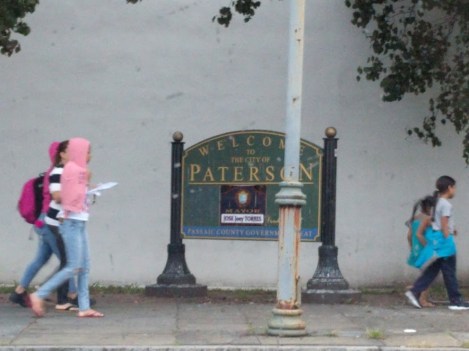
We leave Paterson and head back toward Springfield Va, and it is at this point that Matthew suggests that we stop back in Laurel and see if we can find the government caretakers of the old homestead on Loblolly Pine Drive.
He has located a Department of Agriculture visitor center near Loblolly Pine, so we drive there and plead our case to the nice folks, who seem bit amazed that we have appeared with our connection to this place and to the past. Basically the story they tell us is this: The Forestry Research property has been mostly abandon for many years, and the plan is to demolish the remaining structures and let the entire area revert to its natural state. They tell us that only one person lives up there now and mostly he just takes care of the site, but we are welcome to go and look as long as the gate is open.
So off we go, through the open gate and up the hill to the research center. It is clear that nature is well on her way in the planned reclamation. The place looks familiar yet much smaller since the forest, long kept at bay, has begun to take back what was rightfully hers.

Then and Now photos
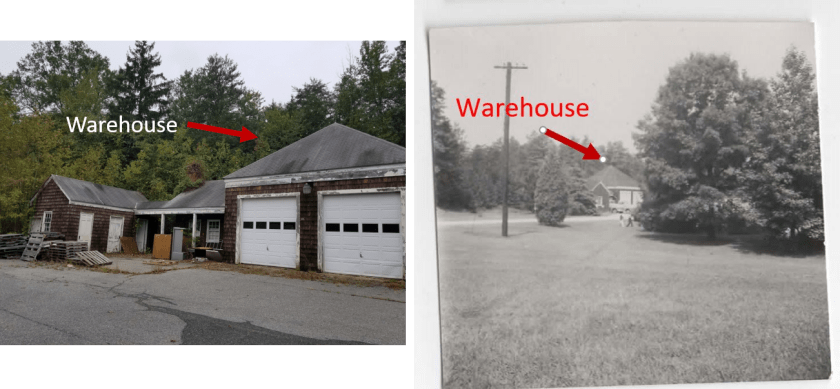
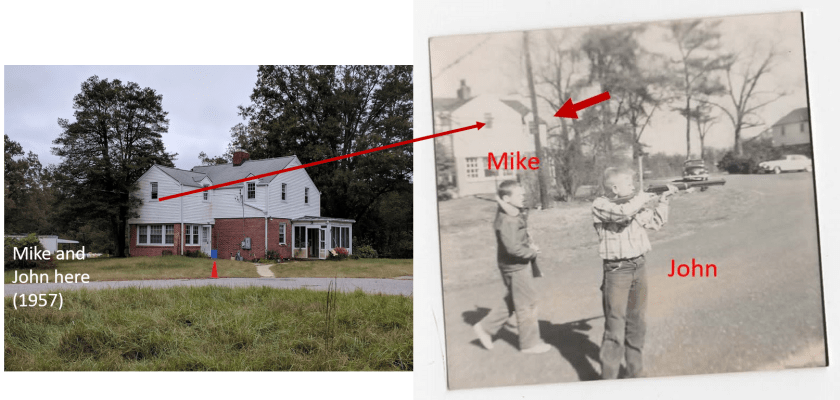
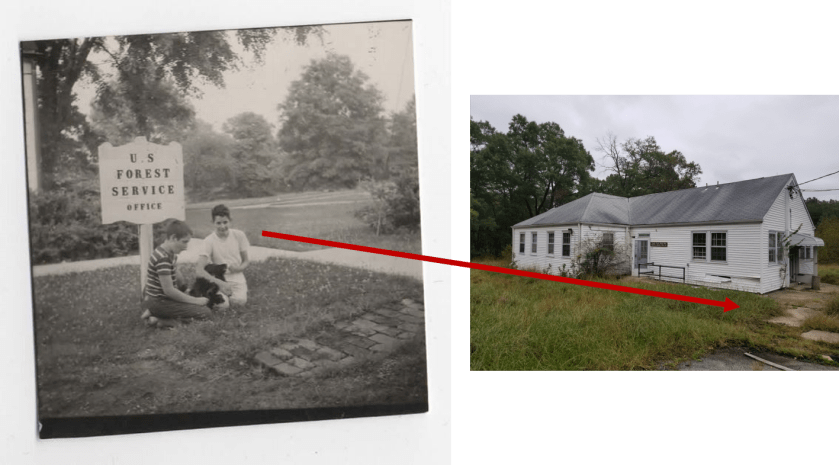

It was a little sad to see the state of the old place up on Loblolly, but of all possible outcomes reversion to the forest is far preferred over yet another golf course, subdivision, or strip mall. A place that studied the forest is preparing to take its last test, and come home. It brings balance, this recycling of the spaces we lived and the times we had, and I am glad we went to see it all again even if the memories seem impossibly distant, like the faded photos in this diary.
I am the last of my tribe and I regret that I didn’t have a chance to share the trip with John and Bill although I did share the pictures we took with Bill in his last days. My kids got to see it though and that is really why I went, to let them know that they are part of the great river, there, in the middle of everything.

 whoisfenton