I spent my formative years growing up on the Patuxent Agricultural Station in Laurel Maryland. Back in the 50’s Laurel was a small town located betwixt Washington DC and Baltimore Maryland, and the research station was an isolated enclave surrounded by miles of hardwoods and pines. The Forest Service would periodically bring research associates to spend a summer doing field work. Ed Zukoff was one such graduate student. Ed had many hobbies, but the one I remember most was his interest in carving and sculpting elaborate and realistic objects from Balsa wood.
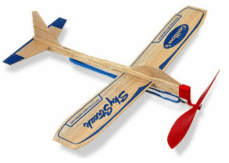
We were no stranger to balsa because our model airplanes came as kits made of this incredibly light wood. Our models were powered by the energy stored in a wound-up rubber band, which when released would drive a propeller. Properly balanced and glued together, our planes could take off from the ground and stay aloft for an incredible number of seconds!
The balsa tree is a species found natively in South America and Mexico. Its scientific name is “Ochroma pyramidale” making it a leading contender for Name Of The Year in the arboreal sweepstakes. Balsa wood is filled with air-pockets and is very light, lighter in fact than cork and the lightest hardwood on the planet. By contrast the heaviest wood, black ironwood, has a specific density 35 times that of balsa; so heavy that it will not float in water. Balsa, as proven at the Fenton Flight School of Laurel, can fly.
You can still acquire these balsa-wood kits today and relive the wild days of your youth, but balsa has been mostly replaced by Styrofoam causing Irving, the God Of Recycling, to weep. Of course time marches on and these days you are far more likely to see and hear quadcopter drones buzzing around the neighborhood. Super cool, but something may have been lost along the way.
(excuse me for a moment)
Hey you kids, get off my lawn!

 whoisfenton