If you live is the Southeast USA you will undoubtedly find it strange that this blog, purporting to speak of good things, would ever spare a kind word for this invasive species. And while I would not include kudzu as a good thing, I will argue here that it is at least an “interesting” thing and one deserving of our understanding, like all things living or not.
Kudzu was introduced to the USA from Japan over 100 years ago. At that time it was to be used as a fast growing shade-creating vine and effective ground cover. How right they were!
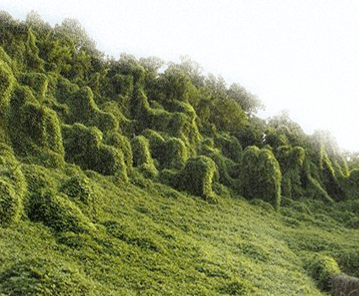
Kudzu is now understood to be a “structural parasite” in that it uses existing objects to climb up and over other plant species to gain access to the sun, thereby starving the plants below. During the warm days of spring and summer the kudzu is incredibly prolific, growing at nearly 12 inches a day.
Kudzu uses nitrogen in the soil far more efficiently than other plants. This can create “vine barrens” or forests and fields where kudzu is optimized to out-compete all other species.

Given its growth patterns, my first thought was what if kudzu could be used for food? After all people eat the monstrous clam so how much further down the food chain can we go? Apologies to mollusk lovers everywhere, but by now my guck intolerance is well established.
It turns out that kudzu has been used as cattle feed and and has been found to contain some vague medicinal properties. Sooner or later someone will bake a delicious kudzu pie, and it is at that point where the vine will face inevitable extinction; such is our propensity for PIE.
Although kudzu represents a nearly perfect example of an invasive species, I still admire it for its ability to survive, and the singular nature of its design.

 whoisfenton