Bao.

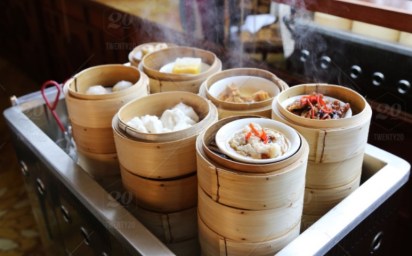
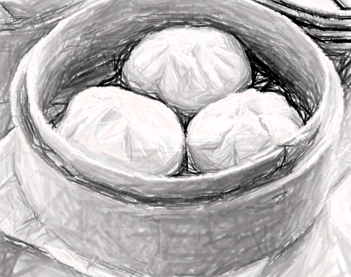
It has been many years since I had char siu bao, all the way back to my decades in Hawaii.  “Bao” is basically a chinese dumpling with meat or vegetables inside.  Char siu bao is a steamed bao with pork inside.  “Broke da mout” as they say in Hawaii.

Bao

Much further back in time I remember a going to a dim sum restaurant in Hong Kong, where they had these giant carts filled with baskets of steamed bao of all kinds.  I think I referred to this place as Dim Yum after that, much to the dismay of my chinese friends.  I also remember the place being very loud, the combination of animated talking and the clatter of dishes building to a cacophony of sound and sustenance. 

dimsum

Pixar produced an award-winning animated short film called Bao, where a steamed bun comes to life, briefly.  Very cool.

Food can be a time machine, reminding us that the past is not so distant as we imagined.  I was in Raleigh the other day having char siu bao, bringing back memories of long ago, far away. 

String instruments.

The Strings remain
An unlikely union
Of taut twine 
And teasing bow, 
Sound soaring
Like notes on wings.
Everlasting hollow wood
Releases its gift;
A complex geometry
Tracing audible curves;
An inner symphony
Of echoes on air.
Plaintive and pure
Artisans of music;
The teacher is taught
Let songbirds sing
And memories fly
All the way home.


Migration.

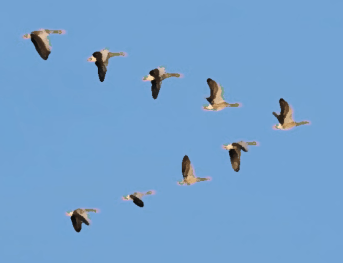
The birds arrive one day by the thousands, hang around for a while and then are gone, seemingly overnight.  Each year like clockwork, butterflies descend like a cloud into the trees of California.  Examples of migratory behavior are everywhere and though we have come to understand what is happening, the why and how have proved more elusive.
birds-1

As recently as the 19th century these mass appearances were a mystery.  Birds for example were thought to burrow under the mud in winter; some suggested that they might even change from one species to another to survive the cold.  One rather famous fellow hypothesized that birds flew to the moon!

It wasn’t until a hunter in England shot and killed a stork, a stork with an african arrow piercing its neck, that migratory patterns began to be understood. The mysteries of nature are thus revealed, although to be clear I was hoping for the Moon Stork.

And we have found that it is not just birds but insects, bats, sea turtles, salmon and a whole host of other beings that make these perilous journeys, placing their trust in instinctive certainty.  These species live out their life cycles in multiple places, going to or away from some environmental imperative to optimize survival and longevity.

How do they accomplish this without access to the internet, GPS and geosynchronous satellites?  Apparently migration uses a number of different mechanisms and some species use them in combination, hedging their bets.  Earth’s magnetic field is a favorite – some animals have tiny particles of magnetite embedded in their bodies and cells.  Dolphins seem to read the contours of the ocean floor while migratory birds depend on the sun, its angle in the sky and the time of year.

Might we, through our deeds and desires, disrupt the very signals upon which survival depends?  Living in harmony with others is not our strength, but I am forever hopeful.

And so they come and go, come and go, riding the physics of the earth.


Hibernation.

Recently whilst walking with my daughter out at Eno River State Park, the topic of frogs came up — and not for the first time.  Frogs are a big deal amirite?

Anyway, we collectively wondered where these little guys go in the winter months to then suddenly appear in such large numbers in early Spring?  I mean we are not considering something horrendous like FrogSpores[tm] are we?  I am guessing that they burrow under the mud or earth to avoid freezing and then go into hibernation with slowed respiration and other metabolic activity.  At least that is how some warm-blooded (ectothermic) creatures hibernate, so I speculate something similar occurs in cold-blooded (endothermic) animals.

It turns out that this is true as far as it goes, but some of our little tree frog buddies have a surprise waiting, oh yes they do.  Tree frogs are not very good diggers so in the winter months they must lodge themselves deep into logs or in crevices of branches and hunker down.  If the air temperature around them drops below freezing, ice crystals begin to form on their skin and then this incredible biochemical transformation begins. 

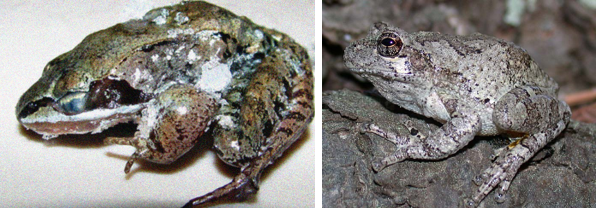
The frog’s liver begins to replace the body’s water with glucose which allows the cells of the frog to freeze without damaging the surrounding tissue.  They then proceed to go into a state of extreme hibernation; their heart stops beating and they stop breathing.  Essentially they are frozen solid and ‘die’.  But as air temperatures rise, the frog’s internal systems come back “on line” and the frog slowly revives. 

frog before and after

It would be cool if these cadaver frogs would shout “BOO!” as they wake, but that would be too much to ask.

Imagine the changes which have occurred over the millenia to develop this adaptation.  Life does indeed ‘find a way’.

And Frog Spores *might* be a good name for a rock band, albeit a pretty strange one.