Trees and other plants use an underground system of roots that pulls nutrients and water from the soil, but also provides structural integrity. The fibrous root ball of some trees may extend horizontally the same distance as the tree is tall, so don’t plant trees to close to your house lest they slowly come to visit you.
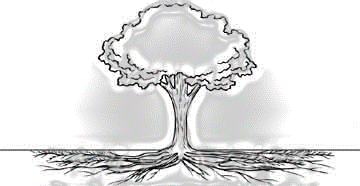
Other types of trees and plants grow from a central vertical root, called a taproot.

There is something solidly real and obvious about the taproot, a large anchor holding the tree down, and one that can seek water in the dark depths during times of drought. Taproots can go way down too, with the wild fig tree sending a root down 400 feet. Seriously, 400 feet? By the way, the wild fig is like the Great White of the botanical world, with these terrifying aerial root systems that reach out to neighboring trees and slowly strangle them, leaving withered husks where once an innocent tree stood.
While doing what I laughably refer to as research on this topic, I came across another category of taproot, the storage root, which itself is an edible part of the plant. Examples of storage roots include carrots, beets, radishes and turnips! So all this time you have been eating taproots! Ew!
I had assumed that the onion is also a taproot, but nooooo. It is a bulb, or a part of the plant’s stem growing at or just below the surface. The humble potato? Sorry that’s a tuber. Why can’t anything be simple?
Anyway, the word taproot is just very cool, all by its lonesome.

 whoisfenton