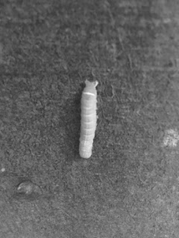
There are so many things to see and do and understand, but not enough time to see and do them all. How do we decide to place our focus here and not there? On a recent walk my daughter spied a small worm or caterpillar slowly making its way across the sidewalk — Winter acting all the world like Spring. Yet something triggered the process of life, a billion tiny engines inside the worm leaping into action. We just happened to come across this one, a tiny iconoclast in a sea of moving parts that never entirely sleep, even in the cold and dark.
77% of the biomass on Earth is made up of plants, 13% is bacterial life, and the remaining 10% is all the other forms of life. I find the 13% bacterial biomass to be an incredible number, even allowing that most bacteria exist in deep subterranean environments and under the ocean floor. The fact that the mass of bacteria is greater than all other animal lifeforms combined is an astonishing outcome. Of course they were the very first lifeforms to appear on Earth, so they had a head start of several billion years. In reality, bacteria built our living planet and continue to do so.
Speaking of odd facts, I was reading that approximately 80% of the animal species on planet are insects, with the number of species of beetles in excess of 400,000. That 400,000 is not all insect species, just the beetles. The Smithsonian suggests that the total number of insect species may approach 30 million, with most of those not characterized, their specific function in the ecosystem not yet known. My daughter and I saw a singular winter caterpillar marching along in what it hoped would the beginning of a new lifecycle. But what of the multitudes unseen?
Despite their numbers we are seeing major die-offs of insect populations across the globe, including pollinators like honeybees. The collapse of honeybee colonies has necessitated that some crops in China be pollinated by human hand. Human beings doing the work the bees used to do. Beware the food chain.
We may feel like the rulers of this planet, but the plants and trees might disagree, and the bacteria certainly would. I imagine the beetles watch with amusement.
We can barely sense the web of interconnected life around us. In 1999 Charles Pellegrino wrote a novel called “Dust” which described a global ecological disaster driven by the loss of insect species. On the back cover of the book is the teaser:
“The bugs are gone. We’re next.”


 whoisfenton