Against the assault of laughter, nothing can stand.
Mark Twain
You might be working at your office cube, or walking around your neighborhood or eating in a restaurant, when you hear the unmistakable sound of laughter. The times may be dark, yet the memory of distant laughter can bring a sense of joy, reverse isolation.
This connection to common things — events, emotions, memories — is what allows us to move on against the odds.
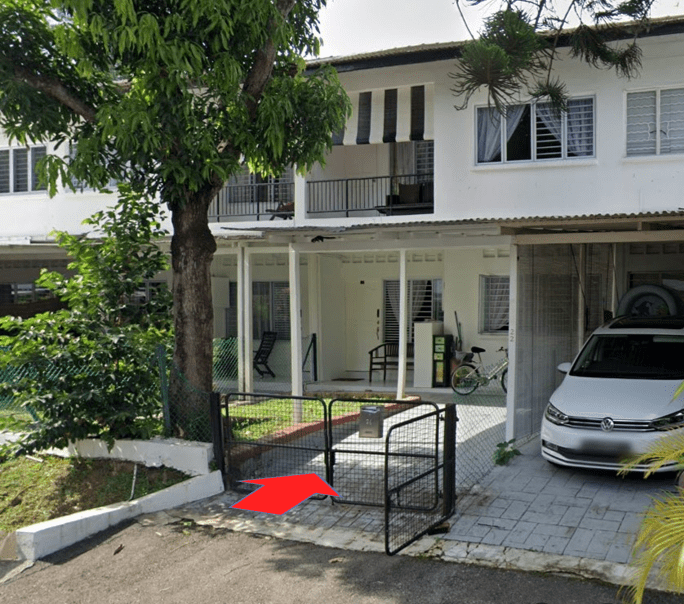
Singapore is essentially on the equator so there is a period of adjustment for the erstwhile expatriate, unless you have moved here from the Sun, then good to go. Arriving in 1991 we needed to acquire housing, and here is the terrace house we lived in until we departed for Korea in 1998. It was on a street called Jalan Puteh Jerneh, a Malay phrase meaning “clear whiteness“.
Address: 24 Jalan Puteh Jerneh
These cold water flats were built in the 1940’s as British Army troop barracks. They are called terrace houses in Singapore; what we would call a townhouse here. Being cold water only we also purchased a couple of these “instant-on” hot water heaters; one for the shower and one for the kitchen sink.
Instant-on hot water heater
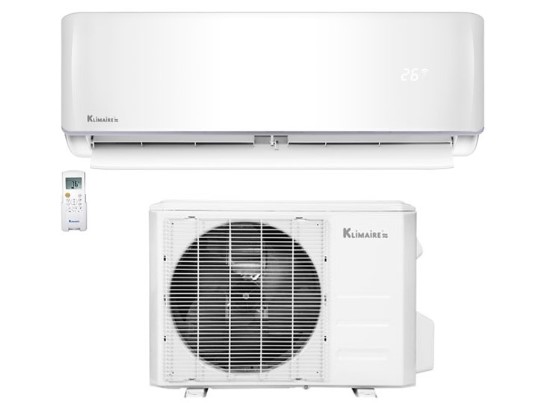
We tried to survive without air conditioning for a while, but eventually broke down and got two small A/C units, one for each floor.
Split Unit A/C
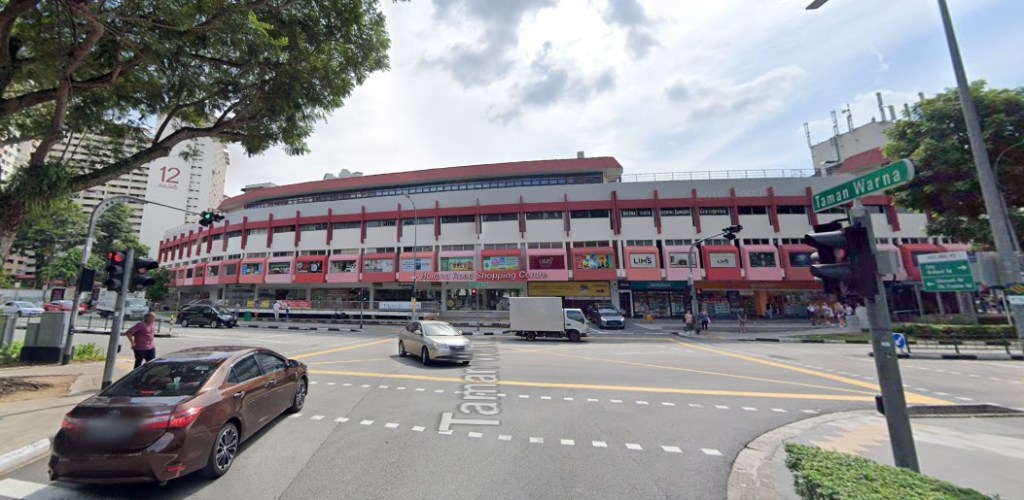
We did a lot of our food shopping up at the Holland Village Shopping Centre, and the open air food stalls behind it, jst a short walk down Taman Warna.
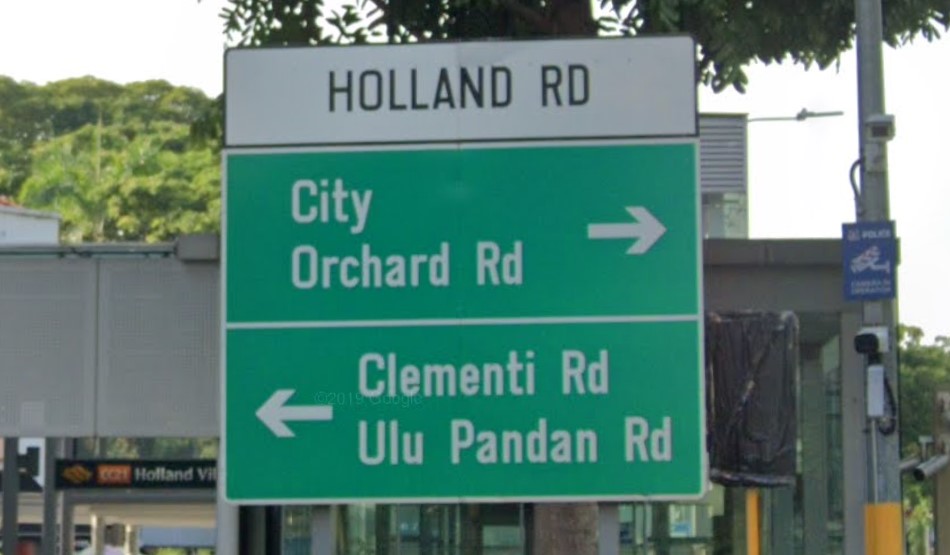
For movies and fancier restaurants we would take a bus to Orchard Road, just down the way.
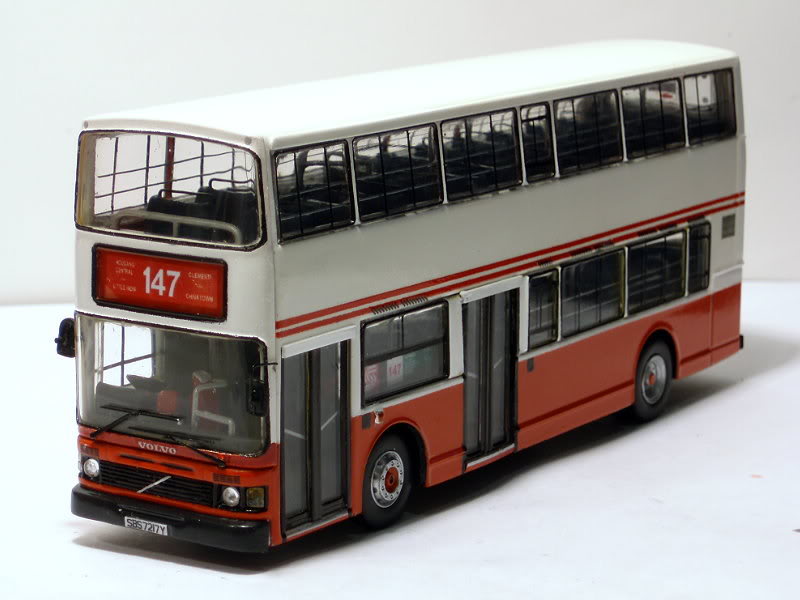
Owning a car in Singapore was a luxury I could never afford, so we would ride the above conveyance all the time. The kids loved riding up top in the very front, reached by climbing a curved staircase. Matthew was 2 years old when we moved to Singapore from Japan. His first word was “buh”, meaning bus. He was a mass transit kid from the get go.
Mass transit in the city-state is very affordable, subsidized by those who drive personal vehicles taxed at a rate of 117%. The way Singapore justifies this is, “we have this great mass transit system but if you want the freedom to drive hither and yon at anytime day or night, then here is your tax bill kind sir.”
Anyway, the double decker buses were a great way to get around, along with the (subsidized) trains and taxis, equally affordable. Sometimes we would take the kids out and just go places in MassTransit Land. The downside was that occasionally we would have to wait for a connection, out in the equatorial heat.
For someone who has spent a significant portion of his life in tropical environments, I have built an odd, extended relationship with snow and ice. Or perhaps it was just Winter seeking retribution, knowing I would escape, briefly, its icy embrace.
Growing up in Laurel Maryland, way back before it became subsumed into the inevitable metroplex, my brothers and I roamed the rural territories morning to night. Ice skating was a favorite pastime, although only my older brother John mastered the art of those slick driving speed skates.
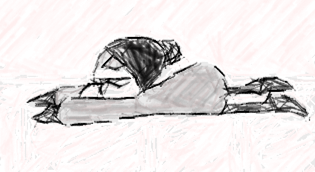
Brother Bill and I preferred figure skates, because the teeth allowed for quicker starts and controlled stops. I tried speed skates but just couldn’t get it, landing with all four limbs splayed out on the ice like some arctic water bug.
In late spring the ice grew thinner in response to the call of physics, yet we would continue to skate on ice that was not safe. It was so thin in fact that the glassy surface would bend underneath our skates as we glided along, and form an ice “wake” behind us. This ice would would “sing” beneath our blades, a popping and echoing symphony caused by the contraction and expansion of frozen water, a fact unknown to us at the time. It was just so cool (no pun intended).
One day we pushed it too far and I went through and under, fortunately not far from the edge of the pond. I tried to crawl to the safety of land but the tipping ice sheets kept dragging me under, like an early failed experiment in evolution. I could briefly see the ice surface from under the water, a.k.a the wrong side of a frozen pond. I was eventually able to crawl ashore, soaked from head to toe in icy water. As we walked the mile to our house, my clothes began to freeze in the cold Maryland air until they were like cardboard–very cold and heavy cardboard. When I slid out of my pants on the porch, I remember that they stood up on their own, as if inhabited by the invisible man.
Thick ice doesn’t bend so easily. Once I fell on pond ice so thick and hard that I broke my collarbone. The doctor who examined me called it a “green break”, akin to how a green tree branch bends and splinters. For some reason this image of bone shards fanning out from my collarbone terrified me more than a clean break. I had to wear an ace bandage wrapped around both shoulders for weeks while the bone reset. I shudder today when I think about those *shards*, brrrrrr.
In earlier Good Stuff entries I have written about the toboggan rides down the hill and across the frozen pond. And the ice storms here in North Carolina that shut down traffic and snap tall trees like matchsticks.
In the big game of Fenton vs The Cold, the cold is definitely winning.
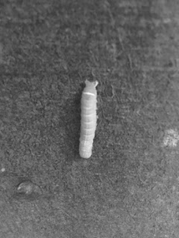
There are so many things to see and do and understand, but not enough time to see and do them all. How do we decide to place our focus here and not there? On a recent walk my daughter spied a small worm or caterpillar slowly making its way across the sidewalk — Winter acting all the world like Spring. Yet something triggered the process of life, a billion tiny engines inside the worm leaping into action. We just happened to come across this one, a tiny iconoclast in a sea of moving parts that never entirely sleep, even in the cold and dark.
77% of the biomass on Earth is made up of plants, 13% is bacterial life, and the remaining 10% is all the other forms of life. I find the 13% bacterial biomass to be an incredible number, even allowing that most bacteria exist in deep subterranean environments and under the ocean floor. The fact that the mass of bacteria is greater than all other animal lifeforms combined is an astonishing outcome. Of course they were the very first lifeforms to appear on Earth, so they had a head start of several billion years. In reality, bacteria built our living planet and continue to do so.
Speaking of odd facts, I was reading that approximately 80% of the animal species on planet are insects, with the number of species of beetles in excess of 400,000. That 400,000 is not all insect species, just the beetles. The Smithsonian suggests that the total number of insect species may approach 30 million, with most of those not characterized, their specific function in the ecosystem not yet known. My daughter and I saw a singular winter caterpillar marching along in what it hoped would the beginning of a new lifecycle. But what of the multitudes unseen?
Despite their numbers we are seeing major die-offs of insect populations across the globe, including pollinators like honeybees. The collapse of honeybee colonies has necessitated that some crops in China be pollinated by human hand. Human beings doing the work the bees used to do. Beware the food chain.
We may feel like the rulers of this planet, but the plants and trees might disagree, and the bacteria certainly would. I imagine the beetles watch with amusement.
We can barely sense the web of interconnected life around us. In 1999 Charles Pellegrino wrote a novel called “Dust” which described a global ecological disaster driven by the loss of insect species. On the back cover of the book is the teaser:
I like the word deadbolt because it has a finality about it. It defines a bolt that is dead because a key can unlock it only from outside. There are horizontal deadbolts and vertical deadbolts but, as far I can tell, there are no diagonal deadbolts, although Diagonal Deadbolts would make a good name for a rock band.
Classic deadbolt
When it comes to locking doors with deadbolts, our creative instincts are on full display. There is the Classroom deadbolt
Schlage B663P Single Cylinder Classroom Deadbolt
The Exit-only deadbolt
Schlage AL25D-SAT Saturn Exit Only
The Push-button deadbolt
Push Button
The Single cylinder deadbolt
Single Cylinder
And a bunch of others.
Meet the deadbolt: simple, solid, functional and well, boring.
Uneven lies the surface Taking us to places We need to be; The hum and hiss Of flying air A background noise Urging us along Insistent In time and space.
Beneath the clamor a rhythm Washing over the rattle and roar, The syncopation of jazz, The long cool water Of the southern blues, The single thread of a violin Soaring on notes written Before the line was made Between A and B.
We are creatures of cadence You and I, Our beating hearts Measure collective moments Feeling the patterns In road songs For the journey That never ends.
Most of the Nature shows on TV make the mistake — in my humble opinion — of characterizing animal behavior in human terms. We say animals are ‘nervous’ or ‘afraid’; they ‘seek companionship’ or ‘want to be comforted’. We say these things about animal behavior even though we really have little to no idea what is motivating them or what’s going on inside their heads. (especially those CATS, amirite?) Our worldview forces us to translate behaviors into familiar terms.
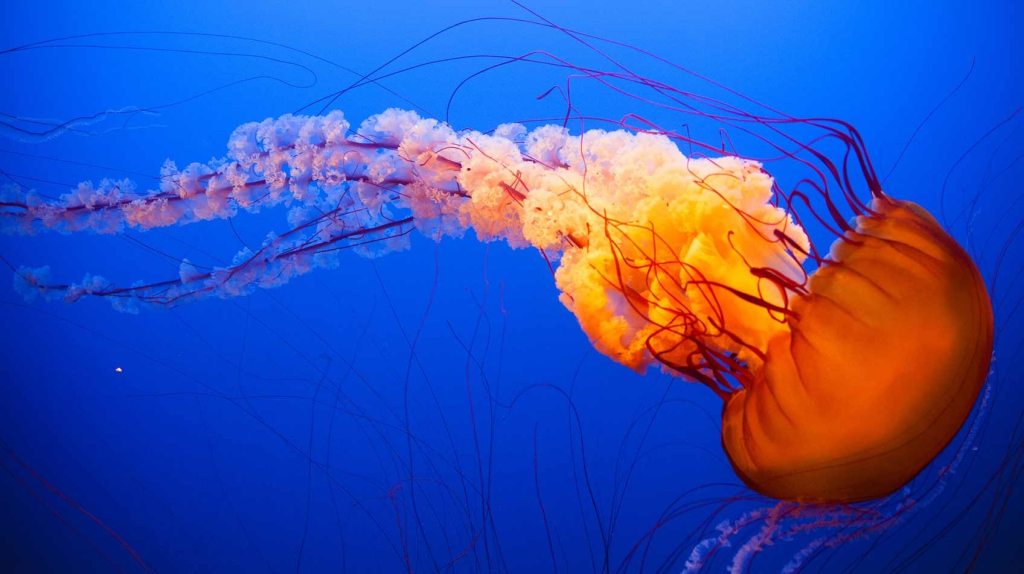
“Cute JellyFish”
A long time ago Matthew asked me how a jellyfish could possibly survive if it doesn’t have a brain. But the jellyfish does have a cluster of nerve cells that create phyisical responses to stimuli like light, pressure, heat, salinity, and these are the inputs it needs to survive and thrive in a harsh and unforgiving ocean (there I go giving human traits to an OCEAN for goodness sakes). Because the jellyfish is so different from us, we have an easier time imagining it as a kind of living machine programmed to react to its environment. We would never place human characteristics on it as we would ‘higher’ animals, those seemingly more in line with our own physical makeup.
“Less Cute JellyFish”
I guess what I’m wondering is this: What if the problem boils down to one of complexity? What if we are some kind of really advanced jellyfish, with enormous clusters of nerve cells allowing us to respond to the Universe in complex ways? And what if the beings above us on the evolutionary ladder interpret our behavior in their terms?
Several years ago we had an opportunity to observe North Carolina’s calm, measured reaction to a 12-inch snowfall. The responses ran the gamut from abject fear to screaming panic. We southerners like the way nature handles things and prefer to let old Mr Sun work his environmental magic on the snow. It snows, it melts, dun.
My kids were at an age were they responded with kid-like glee, marveling at our area being so suddenly and completely transformed. But they did come up with the inevitable question: Why is snow white?
Not a bad question when you realize that ice is not white and a close examination of a snow proves it’s composed of only small ice crystals and not cotton, vanilla ice cream or whiteout, that ancient substance used to correct errors in the days of typewriters.
SnowFlake
The answer to the mystery is really found in the corollary: Why is anythingwhite? We remember that our so-called white light is really composed of a number of different frequencies of radiation (the spectrum), or so I’m told by Mr. Roy G. Biv (Red-Orange-Yellow-Green-Blue-Indigo-Violet). Materials interact with light in such a way as to reflect back to us all frequencies that are not absorbed. It is these reflected frequencies that give things their color as interpreted by our onboard optical apparatus. If all the incoming frequencies are reflected back to us, we see the object as white; if all frequencies are absorbed, it is black. So, somehow snow is bouncing the entire spectrum right back at us. How?
Ice is not completely transparent; it is translucent. As light passes through the crystals of a snowflake, its direction is slightly altered. The new path is further redirected by the next snowflake and so on, until the light eventually comes back to us (although on different paths, otherwise we would have a mirror effect). The color of all the frequencies in the visible spectrum combined in equal measure is white, so this is the color we see in snow, while it is not the color we see in the individual ice crystals that form snow.
Helpful Wikipedia Diagram
Ipso Facto, E Pluribus Unum, Habeas Corpus. Ain’t science grand?









 whoisfenton