Seeing something for the first time.

I spent time recently cleaning up some trimmings in the back yard. By “some trimmings” I am referring to a monster pile of cut branches from our crepe myrtle trees, otherwise known as the FrankenTree. I love the smooth brown trunks and the beautiful spring flowers of the myrtle trees, but man do these babies grow fast. Ours reached 25 feet or so when I cut them back to eight-foot stalks, so here I am standing by the pile, lopping shears in hand.

Pretty boring little story amirite? Yes, there I have used internet lingo which should never be spoken by anyone over the age of 24 or so, and one which makes my daughter cringe when I say it. ikr? Heh.

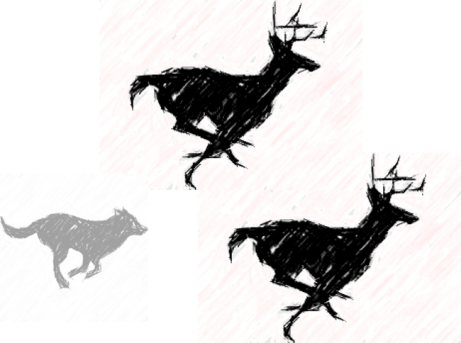
Anyway, just when you are resolved to accept the banality of little things, life has a way of surprising you and showing you something you may not have seen before. The forest behind our house is a pretty expansive 1000 acres and slopes down to Bolin Creek. On this day I hear the insistent barking of a dog in the woods, the kind of bark that implies urgency and intent. And there amongst the trees I see this pure white Husky running and barking, running and barking, chasing three full grown deer. They pass not 30 feet from me and all I can do is watch the show.
dog and deer.png

They head off down the way toward the creek, the white dog a dwindling blur, his barks diminishing like a Doppler effect on sound and movement. And then here they come again(!), quite literally running in circles. As they disappear a second time the barking slows and stops, and I wonder if the deer simply had enough of this nonsense and turned to hold their ground. The dog is probably thinking,

“Hey guys I just got out of the house and wanted to run after you! Chill out OK?  Besides did you see look on that guy’s face back there? Priceless!”

The word “ennui”.

Ennui is word that is simply cool to say.  “on wee” provides no clue as to its meaning, which actually expresses a world weariness manifested in boredom.  It is not anxiety ridden like “angst” or quite as painful and dejected as the German counterpart “weltschmerz”, a word with too many consonants and not enough vowels.  Paradoxically I find saying “ennui” cheers me up, which no doubt depresses the heck out of the word gods, giving them loads of aennuingst.

Magic Eye Pictures.

Our visual systems have the ability to create illusions. Sometimes we convince ourselves we saw something that in actual fact was never there. Rarer is how we can hide actual images in the chaos of noise, a third dimension waiting in the static. The so-called “magic eye” pictures are one such, and they can be both a source of delight or a frustrating time waster, depending on the results.

The generic name for magic eye pictures is “random dot autostereograms” which might NOT be a great name for a rock band. I once bought a book of these photos to show the kids, but they could not master the trick of letting your eyes fall out of focus, and then have the 3D image appear, well, like magic. My daughter told me at the time that I could see the images because I had “old eyes”, an observation that has become increasingly true over the ensuing years. Now I am seeing all kinds of things, random or otherwise!  Can someone please take the unicorn out for a walk?  The pacing is driving me mad.

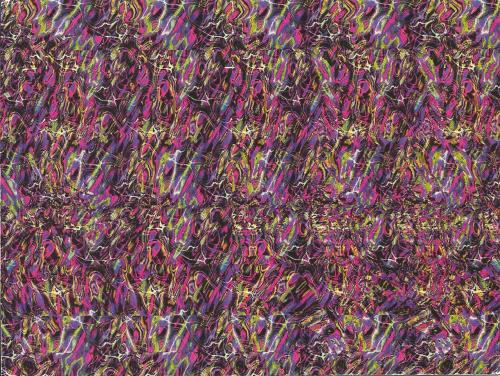
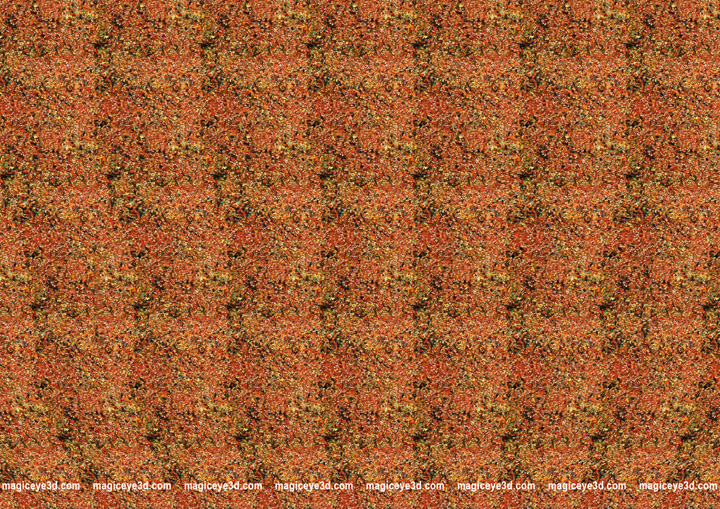
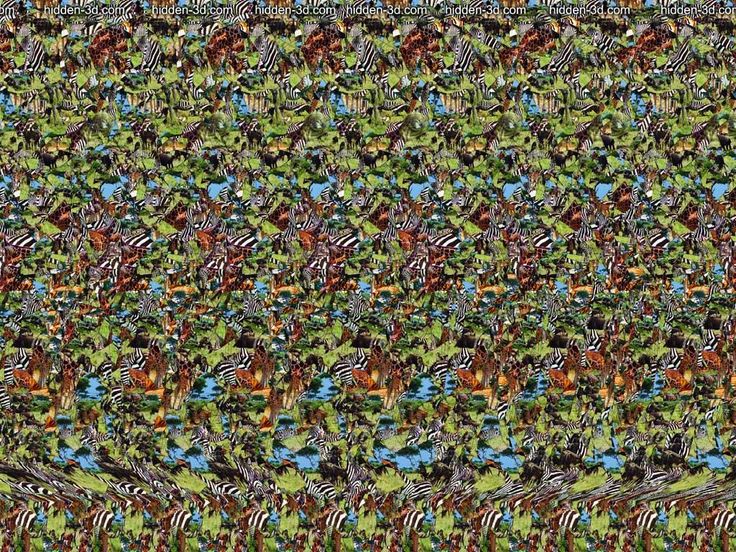
I attach here a few magic pictures, but please don’t blame the messenger.

(Animal in cave/cage?)

015magiceye3d

(Flowers)

magic-eye-1

(Fish)

magic-eye-2

(car)

magic-eye-3

(elephant)

magic-eye-elephant

Day-old baked potatoes.

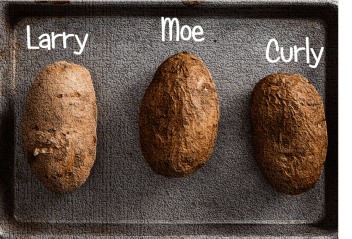
potato

It may be my Irish heritage coming to the fore, but I have always loved potatoes. I even like scalloped potatoes although they can begin to approach a level of guckiness which triggers my fine-tuned guck coefficient. A well-baked potato is my favorite though; the kind with the real thick skin. I tried to make these in the slow cooker once but succeeded only in creating extremely well-steamed spuds (which would be a great name for a rock band). The slow-cooked potatoes were fine just not awesome.

Oh and all these toppings and fillings? Sour cream are you kidding me? Let’s put some cream on this potato and we might as well make it *sour* because what could be better?   Sour. Cream. My fingers hurt just typing that. Butter maybe, but only thoroughly melted; no congealed little chunks of butter laying there like detritus left over from the Guck Wars. And just because we got lucky with that whole chocolate and peanut butter combo doesn’t mean we should experiment with potatoes and bacon. For god’s sake just leave well enough alone.

Baked potatoes are also the kind of food that improves with age. I can eat a day-old baked potato *cold* and it might as well be manna. I am trusting that I am not the only one on the planet who feels this way because if I am then fetal position here I come.

And while I am in a confessional mode I might as well say …  pizza. Day old. Cold. Yum. Deal with it.

Antlions.

Late spring and early summer brings out life in all shapes and sizes. Many of these creatures are programmed to establish the next generation and thus have devised an astonishing array of behaviors to survive, even though they are racing against an implacable clock which always wins.

antlion_trap-1

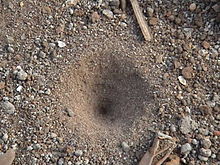
Growing up in the wilds of Maryland my brothers and I would find pits in the sand, like inverted cones. These were perfectly round and exquisitely designed, and it was clear that these excavations were made, but by what? By blowing straight down on the structure the sand would be moved aside to expose the tiny culprit: an antlion!

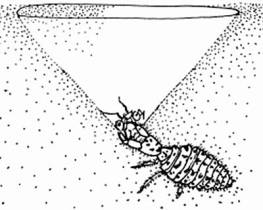
In the larval stage the antlion fashions these craters by digging down round and round in a tightening spiral to finally lie in wait at the bottom, great mandibles at the ready. When an unsuspecting ant or bug falls into the pit disturbing the walls it triggers a tiny avalanche and is the signal for the antlion to attack and grab its prey.

antlion-trapping

In reality this is a terrifically effective hunting strategy – the prey slides right down to you — none of that tiresome running and chasing. The antlion larva has a fierce aspect and would be the stuff of nightmares and science fiction movies if they were the size of say, a small dog. Yikes. Don’t worry; they are at most a centimeter or so in length.

lacewing

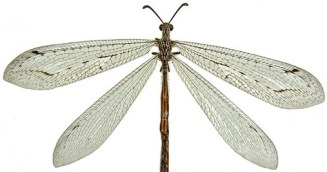
I used to wonder what the antlion turned into in their final stage of metamorphosis. Incredibly they become a type of dragonfly called an antlion lacewing. One would never expect that these two insects are the same creature at different stages of life. As I wrote earlier about metamorphosis, this allows the larva and the lacewing to go about their business without competing with one another.

Some readers might be creeped out by any insect, but I find them to be amazing little engines of life and survival. And when you think about it, aren’t we all?

Sand dunes.

Give wind, water and gravity enough time and they can reduce the largest rock monolith to sand. I think of sand dunes as the rock conspiring with the wind in a futile attempt to rebuild the mountain, a kind of natural alliance designed to restore geographic memory. But it is not to be. A humpty-dumpty of a billion shards will defy reassembly, yet the great rippling fields of sand are impressive in ways the mountain can only dream of. The dunes move and morph before a fickle wind, alternating peaks and slacks in a sinuous choreography orchestrated by an ancient and relentless phantom.

desert-sand-dunes

Make the wind strong enough and the sand becomes a storm, mixing earth and air like a dry tide in darkened skies. All you can do in a sandstorm is hunker down to keep from being buried alive. Like all storms these pass, leaving fresh contours upon which we are allowed to etch our meager paths.

In Frank Herbert’s great space opera, Dune, the desert planet Arrakis forms the backdrop of an epic story of intrigue, peril and discovery. Throughout the novel and its follow-on works, we are introduced to this parched planet nearly devoid of water, the great dunes and the secrets they house.

Our dunes may not be as dramatic but they have a story to tell, each and every one.

Hummingbirds.

hummer-1

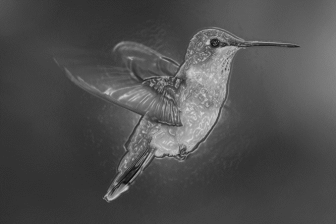
Hummingbirds have been around for a long time, perhaps as long as 22 million years in their present form. They are clearly very small birds, but have characteristics that make them seem more like bees. I wondered if bees and hummingbirds compete for the same nectar sources but it turns out they do not, mostly due to the fact that their visual systems are optimized around different wavelengths of light, hence different flowering plants.

The hummingbird beats its wings 50 times a second, heart racing at one thousand beats per minute, requiring this little dynamo to convert nearly 100% of the food it eats to energy. At night they slow into a quiescent state, almost like hibernation. You would think that these frenzied actions would lead them to have short, albeit exciting, lives. Yet they seem to live 10-20 years – somewhere between the mayfly and Methuselah.

I grew up on a tract of land owned by the US Forest Service, where Pop worked whilst his kids roamed the woods and fields of Maryland. Today Washington and Baltimore have expanded north and south respectively to create an enormous metroplex, but back then Laurel Maryland was still considered small town rural America.

It was there on one late summer afternoon that I was to encounter my first hummingbird. I was headed out back on a very important acorn gathering mission when I spotted a splash of red on the screening of the door. A ruby-throated hummingbird had flown into the screen and gotten itself stuck, it’s beak firmly embedded in the mesh like a spear in amber. I thought, “here is something you don’t see every day”, and if it were to happen today the images would go viral on the internet tubez. But these are ancient times so I went inside to get the butterfly net.  Yes, we had butterfly nets; we were not complete, twitter-less savages.

I carefully pulled the little dude free and held him in the netting, amazed at how light and fragile he was; like air with wings. I knew this bird could not be kept like a pet, as they are creatures destined to be wild and free; not stuck in a cage or on a screen. After showing off my find and gaining valuable street cred with my brothers, I opened the net and watched him zoom off, none the worse for wear.

Once is a while we are part of a moment that stays with us over the years. Push and pull, give and take – the coin of our realm out here in the great world.


Ferns.

ferns-1

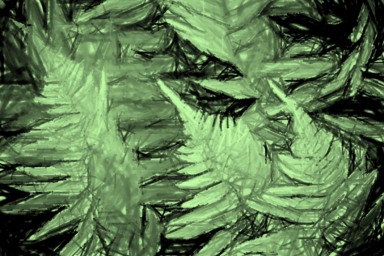
Survivors impress me.  They overcome, adapt, persevere.  They can be relied upon.  They have your back.  And this brings us to ferns, quietly unfurling their delicate fronds in pretty much the same way for 180 million years.  I don’t know about you, but I find that kind of incredible.  In a world where everything seems to change willy-nilly, the fern achieves nothing more than stasis, and does so without gaudy flowers or shy seeds.  I normally avoid things that use spores to reproduce because I find spores to be somehow alien and disturbing; but in this case, I’ll give ferns a pass.  After all, they seem to have discovered the secret to longevity, down on the damp earth, fiddleheads coiled amidst the sunlight.

Random Walk.

I think of mathematics as if it were a real world. You open the door to your house, walk down the path to the road and head off into “Mathlandia” taking any direction you choose. Unfortunately for me, my journey into this world begins and ends just beyond my front door. From there I observe the vast universe of mathematics, impressed with its scope and power. Then I pick up the morning paper and go back inside to see what odd foibles we have been up to whilst I was sleeping.

It is from this lofty perch as math observer that I thought about the concept of
“random walk”. Imagine a drunk as a skunk party goer clinging precariously to a lamppost. It is late and he must get home but seems to have lost his way, if in fact he ever had a way to begin with. Nonetheless he departs the safety of the lamppost and embarks on a series of short staggering journeys which take him hither and yon in a chaotic pattern.
Our good friends at MIT made this little graphic of not one, but seven such wandering souls.

After a series of “N” random lurches of average distance “r” you can approximate how far from the lamppost our brave explorer has gone. And this is where math goes from merely interesting to way cool, bro. This little mental exercise in drunken hijinks has practical application in myriad fields, including gas diffusion, bacterial colony growth, financial market behavior, and even baseball!

Under our seemingly chaotic world a structure exists — awaiting discovery – out there in Mathlandia.  Get out there!

The word “scallywag”

scallywag

This word has an uncertain origin but it does look a bit like a useless lay-about, a person of slightly ill-repute whose crimes are equally petty and minor. Referring to someone as a “scallywag” these days is likely to get you quizzical stares or perhaps a more bellicose response if the target senses a certain negativity in your constant braying. So if you call someone a scallywag, do so in a lighthearted and whimsical way, lest you happen upon a mean-spirited etymologist or reclusive crossword puzzle fanatic, in which case prepare for some seriously superficial banter.