Squirrels.

I am hesitant to categorize squirrels as good things because we have such a complex relationship with them. If you are speaking to someone about squirrels and they use the word “cute” somewhere in a sentence, you should take care not to refer to squirrels as “rats with tails” because this will create a certain amount of tension.

We are surrounded by forest and therefore must find ways to coexist with our fellow creatures, great and small. A few years ago I found a baby squirrel on our driveway next to a downspout. Apparently this baby was attempting to climb up to the gutters, gutters I should add that are capped with expensive gutter guards installed years ago. These guards create perfect living quarters for squirrels and I guess this baby squirrel had fallen from its rooftop home on to the tarmac below.

I got a towel to pick the tiny thing up and placed it (the squirrel not the towel) in the forest nearby. It wasn’t long before the adults arrived and carried the fallen one off to heaven knows where. Oh wait I know where — they took it back to our house with the convenient gutter guards. I mean my god have squirrels no sense of decency?  I saved their child from near death on the pavement and what thanks do I get? Not even a simple thank you or tip o’ the old cap.

So next time you have that conversation about squirrels and the word “cute” comes up, never refer to the fluffy little assassins as “rats”. Refer to them as “ungrateful gutter rats”, then turn and race swiftly away to become a dot on the karmic horizon.
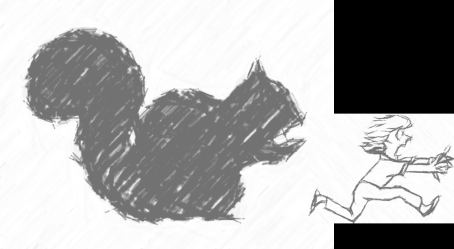
man-running-squirrel

Bad lawn.

We could use some rain about now
The snow doesn’t really count
Because roots need warmth
Not icy tendrils to hunker under.

The sun is out and the tundra exposed
Bare and cautionary to see
Winter has done its thing
To hide as best it could;
But the surprise grows old
And predictable.

We are symbiotes you and I
Living together all these years
Like that time you took out
The old tree by the fence;
And watched the dogs
Run and play.

The bad lawn calls out for bag of mulch
And a helping hand with these weeds
that would grow in concrete if allowed;
oh, and some topsoil will help
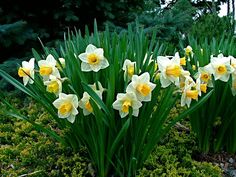
The daffodils open and celebrate
The coming of Spring.

daffoldils

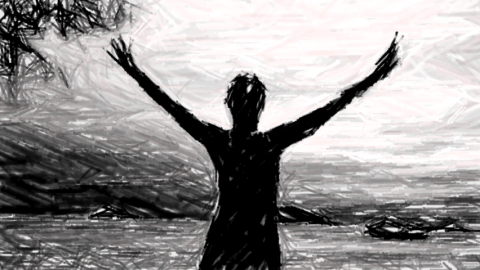
Hope.

Such a simple word, hope.  The very act of believing it gone awakens it somehow.  Sometimes in those hours when hope seems lost, you will hear a song, see a sunrise, remember that silly thing you said, or look up at the beauty of the unattainable stars. Then, if you listen carefully the sound of hope rises like a great wind, all around us, each moment filled with memories pulling us back to the place where all things were possible; a place we never really left. We wait for hope to come round like a force of nature — to take us past the tough times and deposit us safe and sound on the distant shore — but in truth hope never comes to us.

It is us.

hope-2


Exotic Asian Fruit.

One of the advantages of living in Singapore or other country in Southeast Asia is the availability of amazing fruit, most of which I have been unable to find in the west.  The names themselves conjure up another world.

Behold:

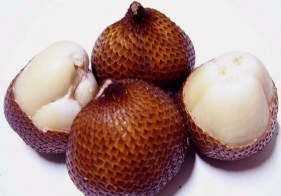
salak1

Salak. Called the “snake fruit” because of its scaly outer coating, it houses a delicious sweet and tangy interior. It tastes a bit like pineapple, but then not. This is a characteristic of many of the fruits of this region; they taste like something you may have had before, yet are still unique.


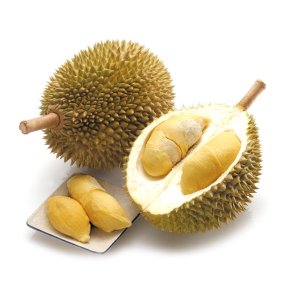
Durian_Fruit_1024x1024

Durian. Durian is known is Southeast Asia as The King of Fruits. It doesn’t smell like something you would actually eat. I believe the phrase “an acquired taste” was created expressly for the durian. The spines that form the outer covering of the durian are hard and sharp, and care must be taken in opening one. And one does not “eat” durian – one “has” durian.


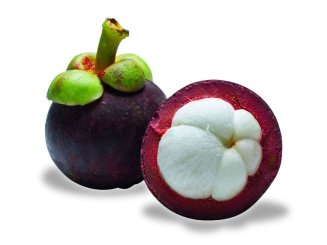
Mangosteen. This is my personal favorite. You peel off the purple skin Mangosteen1and expose the segmented fruit inside.  It looks all the world like a tangerine except the mangosteen segments are a brilliant white, a startling contrast to the purple skin. I could consume a dozen or more of these babies in a single sitting. The taste is an almost perfect balance between sweet and sour, a combination of strawberry and raspberry and peach and some elusive “other” flavor. The mangosteen is known as The Queen of Fruit in Southeast Asia.
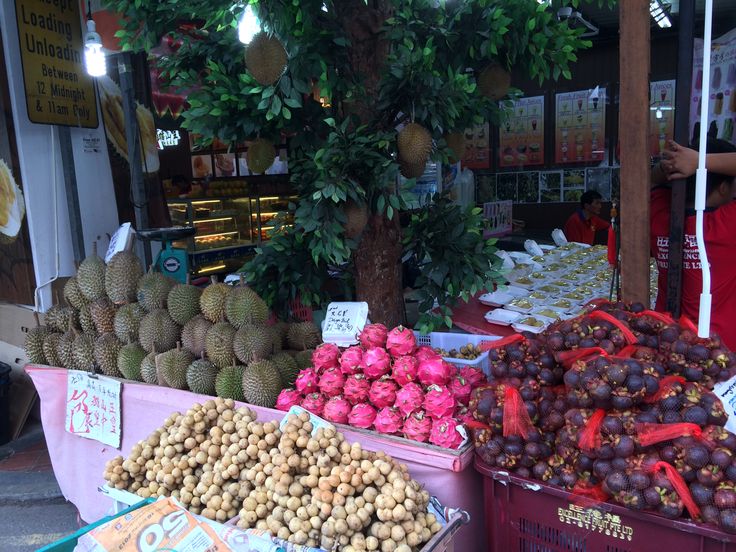
If you happen to find your way to Singapore or Thailand or Indonesia or Malaysia, be sure to visit the open air produce markets, where you will find these and many more fruits to delight the senses.

singapore

Hail storm.

hail

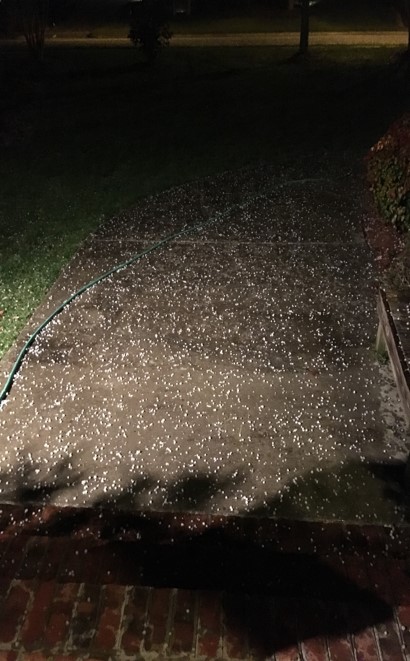
As soon as you hear the sound on your roof you know it isn’t rain. It is hard and insistent like a stampede of tiny animals. The storm produces brilliant flashes tied to deep thunder trying its best to keep up. The hailstones can be cute little things, round and smooth as tiny cue balls, but sometimes they are ragged and rough like icy vagabonds hitching a ride to Earth. The largest hailstones can tear holes in the roofs of houses and dent cars at which point they cease to be mere novelties. Hail surprises because ice seems misplaced in the warm air of Spring; a remnant of winter swirling above us in the high, cold air.

The word “rambunctious”.

Rambunctious-1The word “rambunctious” is not often seen in polite sentences these days, possibly because of its unruly length and large number of vowels, lacking only the ‘e’ to complete the vowel quintet.
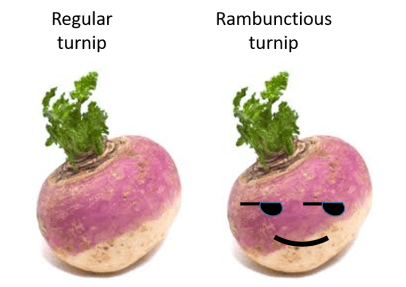
The rowdy behavior described as rambunctious can only apply to a certain set of living beings, like puppies and teenagers. On the other hand one would never use the phrase “rambunctious turnips” unless attempting to win the Best Rock Band naming contest.

turnip-1

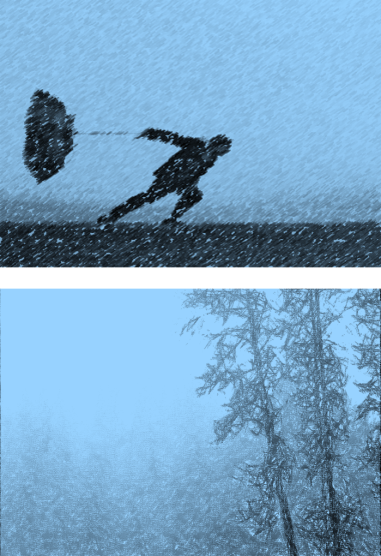
A sudden Spring rain.

It comes all at once new rain
A companion to contemplation
Displacing the quiet stillness
With a sudden fury
That rattles the windows
And hammers the roof;

Beyond ideas and dreams
And desires and wants
In case you had forgotten
The great world competes
With all the other things
That demand attention

Though tempted
By coy distractions
And insistent chatter
This fierce rain
Reminds the senses
and announces
not that it exists
But that you do.


The Giving Tree By Shel Silverstein.

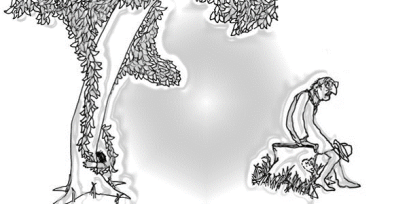
One of the best and influential books I read as a child and one I would faithfully read to my kids at night before bed was the simple tale of The Giving Tree, by Shel Silverstein. Silverstein’s vision of the tree as faithful companion of the boy, provider of shade to the young man, of wood for his home, and even in death as a place to rest the weary bones of the old man, resonates on some deep level with our better angels. And I want to believe that this sense of consistent caring is felt by everyone who reads the book. We all want to be that loyal and kind, to give of ourselves as part of all the things with whom we briefly share the planet. The Giving Tree embodies one of the reasons I write about “good stuff”.the giving tree

We may give blood, or open the door for the person whose hands are full (or even if they are empty), or say “good morning” and “thank you”, or work at a food bank, or do all the myriad things large and small where we help one another. We don’t have to but we do them anyway, because it feels right.  In those moments we set aside our cynicism and ego and become The Giving Tree, each and one.

Armadillos.

armadillo

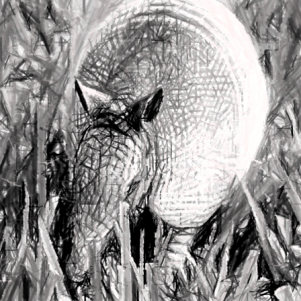
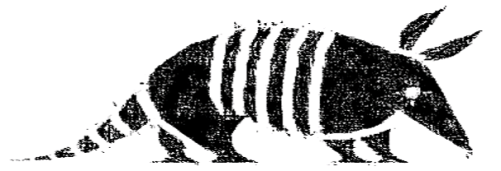
I am not sure what I find so intriguing about armadillos. It may be that they have adapted over the millennia and are a tenacious survivor of evolutionary tensions. They also have an unusual appearance in that they are armored with flexible plates, although only one of the 23 known species is capable of rolling up like a pill bug. All the others avoid predators by “fleeing on foot” through the dense underbrush, digging down in soft earth or swimming great distances.

There is one species called the screaming hairy armadillo which squeals loudly when picked up or is otherwise disturbed. It goes without saying that Screaming Hairy Armadillos would a GREAT name for a rock band and I blame the Rock Band Naming Society for this glaring oversight.

In doing what I laughably call “research” for this blog entry, I discovered that the overlapping scales on the armadillo’s back are called “scutes”, providing yet another triple word score in Scrabble and a candidate for Best Word Ever.

Like all living things, well *things* generally, behaviors and population dynamics are governed by physics. This is not surprising because physics attempts to describe and predict the physical universe, of which armadillos are a part. I think universities the world over should offer a course of study called Armadillo Physics taught by wild-eyed scientists wearing rumpled lab coats and carrying clipboards covered with cryptic runes.

Sign me up.

arma-2

Phototropism.

We all know that plants move, just that the motion is pretty measured relative to their brethren over in the animal side. This slow-motion dance is often the result of plants sensitivity to the gradual cycles of sunlight, darkness, warmth and cold.

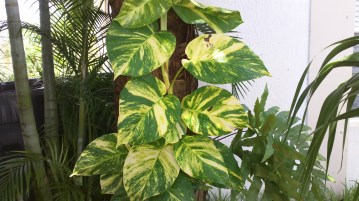
Plants that seek the sunlight will twist and turn to follow the sun in an activity called positive phototropism.plant-negative

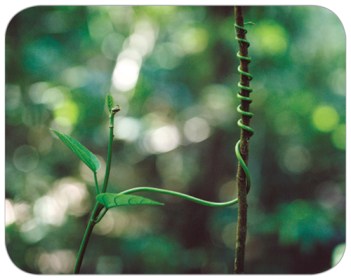
On the other hand (or leafy appendage) some climbing plants, like vines, exhibit a very cool and remarkable behavior. If they become disconnected from the tree or structure that supports them and fall to the ground, the portion on the ground will move off in the direction of something else to climb. The strategy it employs is to basically move away from the light and toward the shadows, because darker areas are likely to mean the trunk of a tree or other vertical surface.

DCIM105SPORT

These vine stems are now *negatively* phototropic, growing away from the sunlight and toward the shade. Once the vine resumes its vertical climb, it switches back to its more normal positive phototropic behavior. As it grows upward toward the sun, its leaves become larger and larger to collect the maximum amount of the sun’s energy.

We humans like to place such plants in hanging baskets and let the vines trail down in artistic and dramatic ways. However when you understand the way these plants evolved and survived, we are basically hanging them upside down in a way that restricts their normal growth patterns.

When we think about vines and their complex behavior, we might conclude that these plants are in some sense thinking things through as we might, comparing and contrasting a risk/reward model and then making the “right” choice. But the reality — while not ours — is no less complex, happening way down at the molecular level where genes and enzymes interplay. Such mechanisms have been developing over millions of years and are happening right now, out there beyond your window in the light and in the shadows.