Honeysuckle and steel.

Stephanie, Matthew and I visited the District of Columbia over the Memorial Day weekend. Matthew lives in Springfield, Virginia and is already there, whilst Stephanie, Google and I follow the needle to true north along I-95. This holiday in the Nation’s Capital brings a sea of humanity magnified by endlessly teeming hordes. We are no slouches when it comes to teeming, having gained an advanced degree in teemology on the streets of Seoul, Tokyo and Singapore.

There is something oddly compelling about DC in the early summer. The cherry blossoms have come and gone leaving the hardwood forests of Maryland and Virginia to finalize their slow-motion explosion into verdant shades of green. The heat and humidity have begun to establish their dominance over the land.

The vines and creepers awake in symbiotic determination, and I see honeysuckle plants everywhere. These yellow and white flowers carry their sweet fragrance from the memories of childhood and beyond. As kids we would pinch off the stem and taste the sweet water inside and wonder at the magic the world had made for us.
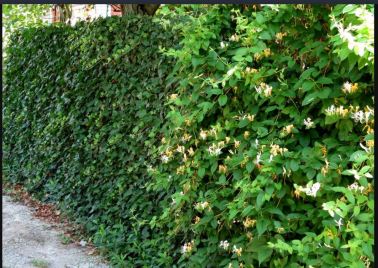
honeysuckle

On the Washington Metro the trains thunder past miles of honeysuckle, hurdling down a gauntlet of yellow and white, tunneling into the persistence of life.  The flowers shudder and wave as the train passes, acknowledging mankind’s cleverness and sagely nodding acceptance of our strange ways. I used to think that they were trapped behind the steel fences that line the tracks, but lately I have begun to suspect that it is we who are trapped and the honeysuckle that is free.

Maybe we are not feeling the train move and sway or hearing the banshee squeal of the air brakes. Perhaps instead the patient earth is gliding passed our train as we remain frozen in stasis, watchful and sympathetic behind the glass.
Things that are hard to do.

Before I begin this short essay, I must first remind myself that for much of the world life itself is hard.  For many, survival offers no option and little choice.  Below I speak to those of us who have been fortunate enough to have been given a choice.

There are lots of things that are hard to do.  Some are physical things like climbing Everest, competing in a triathlon or hitting a 95 mph fastball.   Others are emotionally hard like grieving a lost loved one, correcting a life-long bad habit, or overcoming a deeply-seated bias or fear.  The kind I want to talk about here though are those things that we consider mentally hard, like science or mathematics or gaining fluency in a second language. 

complexity

I remember long ago when I was a struggling physics geek plowing through the concepts of quantum mechanics.  My professor said that a deep understanding of quantum mechanics takes many years of study because the underlying concepts require new ways of thinking and a consideration of abstract ideas different from our day-to-day lives.  I think significant portions of my brain simply keeled over from the effort, and have not recovered to this day. 

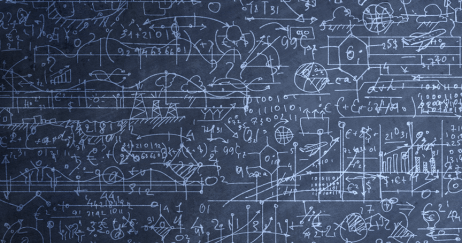
There is another other kind of hard work that involves sheer complexity, where the ideas are not necessarily new, but are difficult because they may contain a large number of interrelated processes.  Managing a large engineering project or writing part of an operating system is hard because of this complexity. 

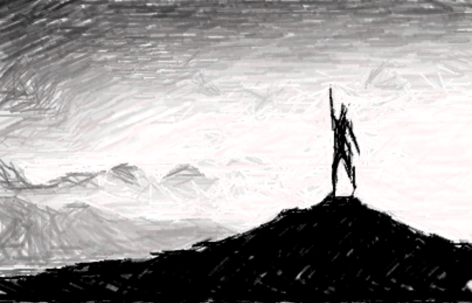
Assuming we have a choice, why take on the challenge of doing hard things?  The mundane, repetitive and easy events have long blurred into a mottled sea of gray; and so I believe that when we glance back at our lives, we will remember vividly the times we took a chance — the effort, the stress, the grind — and the euphoria when we reached the peak, solved the problem or crossed the finish line.  And in those moments we are forever changed. 

mountain


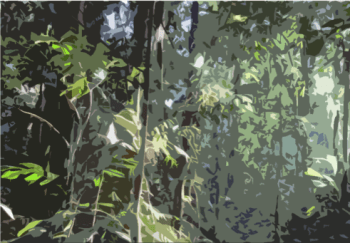
The Rain Forest.

rain-1

Children leave home
To make the world,
Sometimes they wonder
Why dreams unbidden come;
Memories of darkest green
Sunlight glinting
Like a million stars;
Warm air filled with rain
Cloistered and unrelenting;
The living static
On life’s channel.

Petal, leaf and grass
Remember this
in their quiet way;
Glancing up
As a great canopy
Slowly unfurls
To capture light;
Open yet closed
A porous roof
Of perfect symmetry.

Some chose to stay
And sing the songs,
Animals and insects
And myriad beings
Hiding in small places;
Lizards lounge,
Proud birds sail and soar
Doing their part
In the engine room
Of Earth.

We are the seeds
Sent out long ago
And planted
In the heart
Of the world;
The future beckons
And asks us
To keep it safe;
For in the end
We may be surprised
And be galaxies ourselves.


Rivulets.

ru=ivulets-1

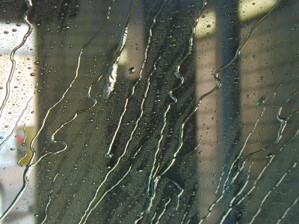
It is the nature of water to seek its grail, to return home and rejoin the great sea. In a summer rain you can watch the little drops combine upon the car window, winding a random path down the glass, meandering with certain intent. These rivulets may be small but taken together they constitute a force that brings balance back to the planet. In winter the ice establishes a temporary foothold until the sun asks that order be restored. When you see these tiny rivulets trundle toward the earth, remember that they are on a mission to build the sea.

Fonts, Typography and Language.

medieval header big

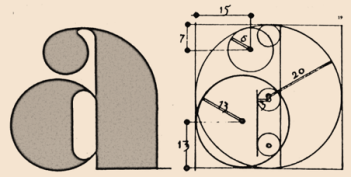
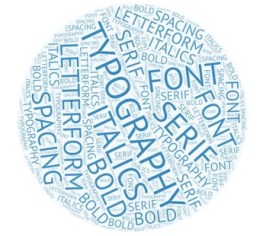
Six hundred years ago Gutenberg invented the movable typeface and put dozens of Benedictine monks out of the business of painstakingly copying books and going back to the business of basically feeling miserable. Gutenberg’s invention also spawned the idea of typefaces, fonts and letterforms, a word I like to use whenever possible.

letter-a

I grew up in the era of typewriters and fix-width fonts like ‘Courier’. In the 80’s and 90’s the Courier font actually gained a kind of regulatory street cred, even after word processing came along with the capability to use both fixed and variable width fonts, like the ever so popular Helvetica.  Back then, some organizations maintained rules requiring that Courier be used in the filling in of forms, for example, making the result appear to have been created on a typewriter and allowing early optical character recognition (OCR) systems the ability to scan the form and extract the contents.

courier-1

The error rate in these early OCR system was disturbingly high, resulting in some very odd memos: “The financial horse lacks jello overall, but we are confident that Jerry Sad will correct the abyss.

Many years ago while working as a systems programmer with the Army Corps of Engineers, I was handed a newfangled printer called an Apple LaserWriter 1.  It had this built-in printing language called PostScript, which allowed the printer to render a page of text as basically graphics, seeing no distinction between images and letters or, he thinks hopefully, letterforms.  High five!

There are a number styles of writing but they all by and large fall into two main categories: Phonetic using an alphabet, and non-phonetic using pictures.  An example of non-phonetic writing is the Chinese character set which consists of over three thousand pictographs.  Here is one those:

eternal

Chinese calligraphy is an art form unto itself.

Question 1:  Do the symbols of mathematics constitute a language?  I am not certain, however this fellow Galileo Galilei once said, “Mathematics is the language in which God has written the universe”.  Heavy stuff, dude.

Question 2: Are emojis a language? 

Galileo offers no opinion, but Jerry Sad might know.

emoji


typo-cloud


Tumbleweed.

tumbleweed

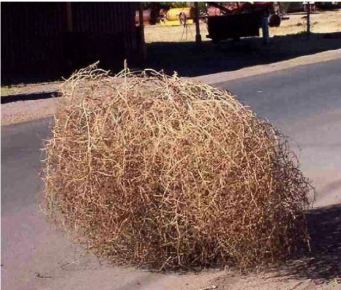
Tumbleweed is the long-distance runner of the plant kingdom, sprinting along in great herds toward the horizon. In arid desert areas certain plant species have devised a unique way to propagate their kind across a hostile and unrepentant landscape. The top part of the plant breaks of from the stem and forms a dry, prickly ball which can roll off in the wind. And away they go, bouncing along like army of spherical soldiers headed toward a botanical skirmish. This strategy works because the seeds of the plant are held within the branches of the tumbleweed, which are then dispersed as the plant inevitably crumbles to dust.

tumblepile

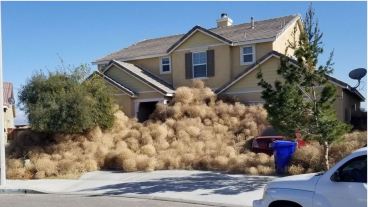
In parts of the western USA the tumbleweeds get trapped against man-made objects like fences, cars and houses, shoaling up like a great wave, absent the sea.

I am not sure why I am so interested in the weird and unique ways of life on earth. But I feel strangely complete knowing the tumbleweed is out there, riding the wind under the incandescent sky and gibbous moon.

The word “conundrum”.

conundrum-2Life is full of those moments that call out for a decision, but whatever way you jump danger lies. The word “conundrum” seems to have the percussive sound of finality, yet it hums a tune of heroic indecision, tossing out frantic notes plucked from a pile of random noises. Given its birth in the realm of the paradox, the word “conundrum” is still pretty cool, both in sound and deed.