
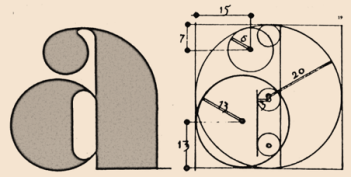
Six hundred years ago Gutenberg invented the movable typeface and put dozens of Benedictine monks out of the business of painstakingly copying books and going back to the business of basically feeling miserable. Gutenberg’s invention also spawned the idea of typefaces, fonts and letterforms, a word I like to use whenever possible.
I grew up in the era of typewriters and fix-width fonts like ‘Courier’. In the 80’s and 90’s the Courier font actually gained a kind of regulatory street cred, even after word processing came along with the capability to use both fixed and variable width fonts, like the ever so popular Helvetica. Back then, some organizations maintained rules requiring that Courier be used in the filling in of forms, for example, making the result appear to have been created on a typewriter and allowing early optical character recognition (OCR) systems the ability to scan the form and extract the contents.
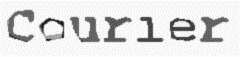
The error rate in these early OCR system was disturbingly high, resulting in some very odd memos: “The financial horse lacks jello overall, but we are confident that Jerry Sad will correct the abyss.“
Many years ago while working as a systems programmer with the Army Corps of Engineers, I was handed a newfangled printer called an Apple LaserWriter 1. It had this built-in printing language called PostScript, which allowed the printer to render a page of text as basically graphics, seeing no distinction between images and letters or, he thinks hopefully, letterforms. High five!
There are a number styles of writing but they all by and large fall into two main categories: Phonetic using an alphabet, and non-phonetic using pictures. An example of non-phonetic writing is the Chinese character set which consists of over three thousand pictographs. Here is one those:

Chinese calligraphy is an art form unto itself.
Question 1: Do the symbols of mathematics constitute a language? I am not certain, however this fellow Galileo Galilei once said, “Mathematics is the language in which God has written the universe”. Heavy stuff, dude.
Question 2: Are emojis a language?
Galileo offers no opinion, but Jerry Sad might know.


 whoisfenton