Riding the swells.

Hawaii is a place designed for outdoor living, whether it’s swimming the endless sea, hiking the mountain trails, or hang-gliding off the steep volcanic cliffs.    

In the ocean you can feel the power of the sea, with wave energy increasing as the square of wave height.   A two-foot wave whacks your knees and tugs at your feet, but a four-footer will knock you down.

In my youth I would make regular trips to Makapuu Beach to body-surf the perfectly formed waves created by the wind and the shape of the bay and the gentle contours of the ocean floor.  These waves were reserved for body surfing and boogie boards — no surf boards allowed.
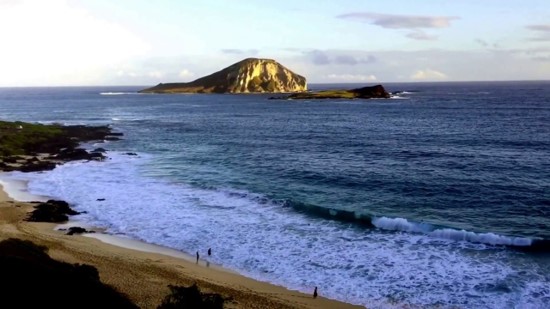
maka-3

The days at Makapuu would be color-coded with flags; green being nearly flat and some would say uninteresting; red meaning big 8-foot plus surf and rough undertow.  Red days were the best even though an eight-foot wave was bigger than I could safely handle.  Instead of riding these monsters I would desperately swim out between breakers, careful to dive under those curling on top of you. 

Once past the breaker line I could safely ride the swells, letting them take me up and up, then down into the trough, momentarily blocking my view of the coast.  The water is very clear out beyond the churn and spray, and brings with it a kind of peace; a sense of balance within the power of the sea.

Inevitably it was time to swim back to shore and brave the gauntlet of breakers on what I thought of as “the other side”.  I can remember being flipped upside down more than once, and being held against the rough bottom by Neptune’s implacable hand.  Then up and gasping, fighting through the white ocean foam which offered little in the way of traction, like swimming in air without, you know, air.  And finally crawling up onto the beach and collapsing like a primordial sea creature emerging into the sun for the very first time.
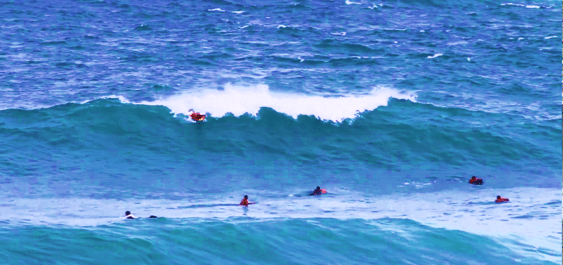
maka-1

In thinking back on these times it seems bit reckless, putting myself at risk, held aloft by little more than the crazy confidence of youth.  But that feeling out there on the swells, of the ancient sea letting me share her ways and keeping a memory, deep and blue?  Priceless.
At the Edge.

The other day I was listening to NPR during my long drive to work.  The topic was how the melding of different types of instruments and musical styles can create surprising new sounds.  In general, where the edges of the two musical genres meet, wondrous new melodies may appear.

This got me to thinking about how edges are everywhere seen and unseen; and how they can be can the source of much of our creative energy and that much maligned word, diversity.

Consider the edge of two ecosystems; a forest and a marsh.  The region where they meet can create conditions where new species might flourish.  The marsh itself may give way to bodies of water where further biodiversity is seen.  While such regions are clearly opportunistic for some type of plants and animals, these ecological edges can also introduce invasive species which might disrupt the food chain.

edge-1

waterbug

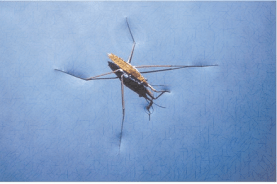
The boundary between air and fluid can form a physical barrier seen as surface tension.  We recognize this natural force in the thin film of soap bubbles or in beads of mercury as they race along a flat surface.   Rain drops are tiny balls of water given shape through surface tension and pulled back to mother Earth in gravity’s embrace.  The water strider insect has evolved the perfect shape and buoyancy in its footpads, allowing it to skate across the water without sinking and thus become a literal example of “living on the edge.”

two

And what of us, the tribal peoples of the world, living in our comfort zones of similarity and identity?  When different societies meet, the cultural edge that forms can bring its own kind of surface tension with a resultant turbulence that can be terrible and destructive.

Yet there is a growing body of evidence that suggests cultural mixing can generate ideas neither group could have achieved alone.  Like a bagpipe player in a jazz quartet, the result can bring surprise and delight and wonder.  We stand astride our edges, moving from place to place, from idea to idea, listening to the great world and making the music no one thought possible — until it was.


Whirlwind.


“And so the hours dragged by until the sun stood dead above our heads, a huge white ball in the noon sky, beating, blazing down, and then it happened—suddenly, a whirlwind! Twisting a great dust storm up from the earth, a black plague of the heavens filling the plain, ripping the leaves off every tree in sight, choking the air and sky. We squinted hard and took our whipping from the gods.”

                                                                            ~ Sophocles, ‘Antigone’,  450 BC

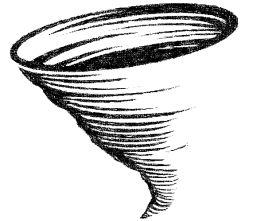
We are surrounded by a sea of air and tend to notice atmospheric anomalies great and small.   If the ground is flat and hot and the air cooler aloft, an updraft occurs which is often imparted a spin.  These dust (or dirt) devils occur around the world and bring amazement to those lucky enough to experience them.  They also have been seen on Mars where I hope my Martian counterpart is writing his/her own story.

twister

These are not the terrifying cyclones of film that threaten to whisk you and your little dog to Oz, nor are they the ocean-sized storms so powerful that they create their own tides and are given names. Rather, these busy little twisters appear suddenly on clear, hot days and are capable of wreaking havoc on lawn chairs and beach balls.

dancer


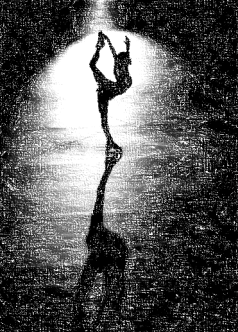
Heat brings pressure and with pressure, movement.  And like a twirling skater bringing her arms in to maintain constant angular momentum, so the whirlwind spins across the land, announcing the physics of the air and asking for balance in all things.


Drizzle.

drizzle-clipart-1.jpgThe sound of rain is reflected in the words that describe it.  Consider the barely audible mist, the hiss of the sudden shower and the kettledrum of the cloudburst.  Yet this humble observer believes no word is better suited to its reality than the drizzle. 

A drizzle is steady and uneventful, reliably delivering water to a grateful earth, but not so much as to cause damage.  The drizzle prefers to fall straight down avoiding the concept of “sheets”.  The drizzle is the Goldilocks of wet weather, the old reliable Ford pickup that simply goes from point A to point B.  “Now now”, says the god of air and water, “don’t be alarmed, I’m just drizzling.”

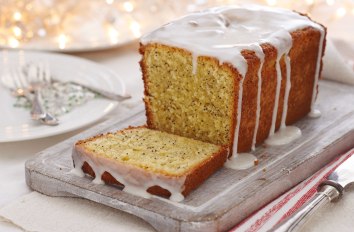
Other things can be drizzled, like frosting on a CAKE.   In fact there is such a thing as a drizzle cake, which I have never had but sounds yummy because CAKE.

LemonDrizzleCake


The Slinky.

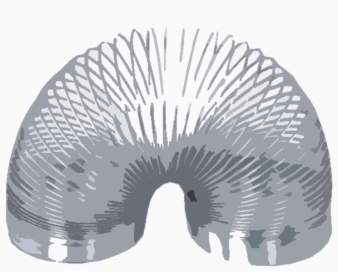
slinky-3Any collection of childhood memories must contain at least one Slinky.  We would never tire of making them ‘walk’ down the stairs.  A simple metal coil of nearly perfect design, the Slinky becomes gravity’s child, coming down the stairs with a methodical and persistent pace.

The Slinky would inevitably get knotted up and defy any attempt at unraveling.  Brute force often resulted in the dreaded Bent Slinky syndrome followed by the concept of Trashcan Slinky.  We had a neighborhood kid who had mastered the mystic art of untangling Slinkies.  He would come over and we would hand him the messed-up Slinky.  In a few minutes he would unwind it and hand it back to us, the entire transaction taking place in silence.  It would have been better if he had said “Voila” (or “walla” for the linguistically challenged).

Metal not plastic.  I never owned a plastic Slinky and I believe to this day that a sentence containing the words “plastic” and “Slinky” violates some fundamental Law of Toys.  Eagle-eyed readers will note that the previous sentence violates the very law it describes.  One of those cool self-referential thingamabobs.

Apparently the Slinky has recently been reincarnated as a kind of squirrel defense, a protector of bird feeders against a veritable army of cute yet evil gray marauders.  Why the birds remain unimpressed remains a mystery for others to solve.


Honeysuckle and steel.

Stephanie, Matthew and I visited the District of Columbia over the Memorial Day weekend. Matthew lives in Springfield, Virginia and is already there, whilst Stephanie, Google and I follow the needle to true north along I-95. This holiday in the Nation’s Capital brings a sea of humanity magnified by endlessly teeming hordes. We are no slouches when it comes to teeming, having gained an advanced degree in teemology on the streets of Seoul, Tokyo and Singapore.

There is something oddly compelling about DC in the early summer. The cherry blossoms have come and gone leaving the hardwood forests of Maryland and Virginia to finalize their slow-motion explosion into verdant shades of green. The heat and humidity have begun to establish their dominance over the land.

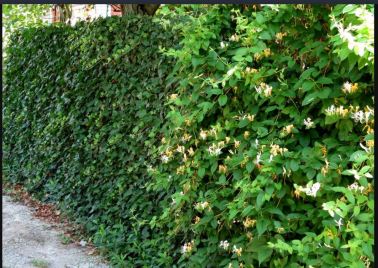
The vines and creepers awake in symbiotic determination, and I see honeysuckle plants everywhere. These yellow and white flowers carry their sweet fragrance from the memories of childhood and beyond. As kids we would pinch off the stem and taste the sweet water inside and wonder at the magic the world had made for us.

honeysuckle

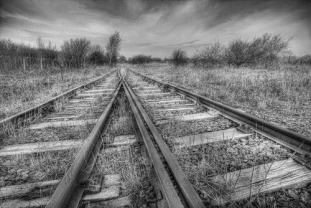
On the Washington Metro the trains thunder past miles of honeysuckle, hurdling down a gauntlet of yellow and white, tunneling into the persistence of life.  The flowers shudder and wave as the train passes, acknowledging mankind’s cleverness and sagely nodding acceptance of our strange ways. I used to think that they were trapped behind the steel fences that line the tracks, but lately I have begun to suspect that it is we who are trapped and the honeysuckle that is free.

Maybe we are not feeling the train move and sway or hearing the banshee squeal of the air brakes. Perhaps instead the patient earth is gliding passed our train as we remain frozen in stasis, watchful and sympathetic behind the glass.

Things that are hard to do.

Before I begin this short essay, I must first remind myself that for much of the world life itself is hard.  For many, survival offers no option and little choice.  Below I speak to those of us who have been fortunate enough to have been given a choice.

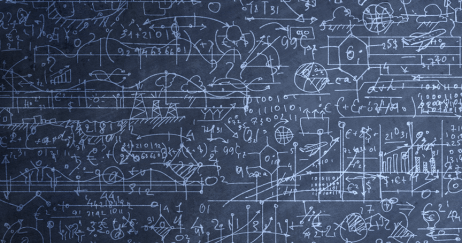
There are lots of things that are hard to do.  Some are physical things like climbing Everest, competing in a triathlon or hitting a 95 mph fastball.   Others are emotionally hard like grieving a lost loved one, correcting a life-long bad habit, or overcoming a deeply-seated bias or fear.  The kind I want to talk about here though are those things that we consider mentally hard, like science or mathematics or gaining fluency in a second language. 

complexity

I remember long ago when I was a struggling physics geek plowing through the concepts of quantum mechanics.  My professor said that a deep understanding of quantum mechanics takes many years of study because the underlying concepts require new ways of thinking and a consideration of abstract ideas different from our day-to-day lives.  I think significant portions of my brain simply keeled over from the effort, and have not recovered to this day. 

There is another other kind of hard work that involves sheer complexity, where the ideas are not necessarily new, but are difficult because they may contain a large number of interrelated processes.  Managing a large engineering project or writing part of an operating system is hard because of this complexity. 

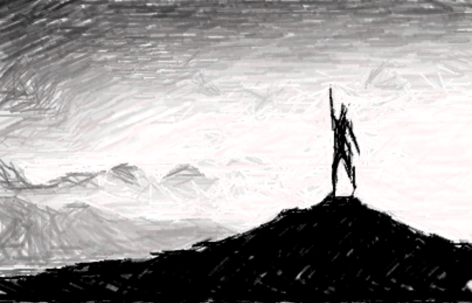
Assuming we have a choice, why take on the challenge of doing hard things?  The mundane, repetitive and easy events have long blurred into a mottled sea of gray; and so I believe that when we glance back at our lives, we will remember vividly the times we took a chance — the effort, the stress, the grind — and the euphoria when we reached the peak, solved the problem or crossed the finish line.  And in those moments we are forever changed. 

mountain


The Rain Forest.

rain-1

Children leave home
To make the world,
Sometimes they wonder
Why dreams unbidden come;
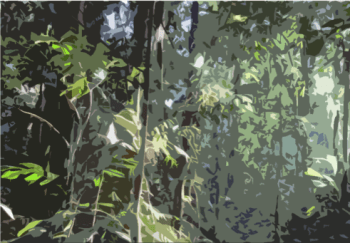
Memories of darkest green
Sunlight glinting
Like a million stars;
Warm air filled with rain
Cloistered and unrelenting;
The living static
On life’s channel.

Petal, leaf and grass
Remember this
in their quiet way;
Glancing up
As a great canopy
Slowly unfurls
To capture light;
Open yet closed
A porous roof
Of perfect symmetry.

Some chose to stay
And sing the songs,
Animals and insects
And myriad beings
Hiding in small places;
Lizards lounge,
Proud birds sail and soar
Doing their part
In the engine room
Of Earth.

We are the seeds
Sent out long ago
And planted
In the heart
Of the world;
The future beckons
And asks us
To keep it safe;
For in the end
We may be surprised
And be galaxies ourselves.


Rivulets.

ru=ivulets-1

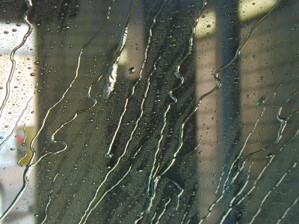
It is the nature of water to seek its grail, to return home and rejoin the great sea. In a summer rain you can watch the little drops combine upon the car window, winding a random path down the glass, meandering with certain intent. These rivulets may be small but taken together they constitute a force that brings balance back to the planet. In winter the ice establishes a temporary foothold until the sun asks that order be restored. When you see these tiny rivulets trundle toward the earth, remember that they are on a mission to build the sea.

Fonts, Typography and Language.

medieval header big

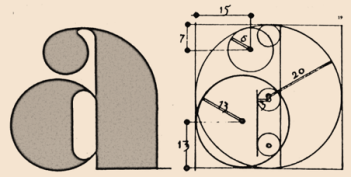
Six hundred years ago Gutenberg invented the movable typeface and put dozens of Benedictine monks out of the business of painstakingly copying books and going back to the business of basically feeling miserable. Gutenberg’s invention also spawned the idea of typefaces, fonts and letterforms, a word I like to use whenever possible.

letter-a

I grew up in the era of typewriters and fix-width fonts like ‘Courier’. In the 80’s and 90’s the Courier font actually gained a kind of regulatory street cred, even after word processing came along with the capability to use both fixed and variable width fonts, like the ever so popular Helvetica.  Back then, some organizations maintained rules requiring that Courier be used in the filling in of forms, for example, making the result appear to have been created on a typewriter and allowing early optical character recognition (OCR) systems the ability to scan the form and extract the contents.

courier-1

The error rate in these early OCR system was disturbingly high, resulting in some very odd memos: “The financial horse lacks jello overall, but we are confident that Jerry Sad will correct the abyss.

Many years ago while working as a systems programmer with the Army Corps of Engineers, I was handed a newfangled printer called an Apple LaserWriter 1.  It had this built-in printing language called PostScript, which allowed the printer to render a page of text as basically graphics, seeing no distinction between images and letters or, he thinks hopefully, letterforms.  High five!

There are a number styles of writing but they all by and large fall into two main categories: Phonetic using an alphabet, and non-phonetic using pictures.  An example of non-phonetic writing is the Chinese character set which consists of over three thousand pictographs.  Here is one those:

eternal

Chinese calligraphy is an art form unto itself.

Question 1:  Do the symbols of mathematics constitute a language?  I am not certain, however this fellow Galileo Galilei once said, “Mathematics is the language in which God has written the universe”.  Heavy stuff, dude.

Question 2: Are emojis a language? 

Galileo offers no opinion, but Jerry Sad might know.

emoji


typo-cloud